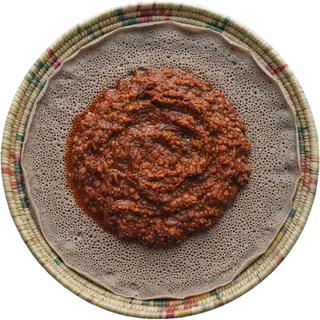
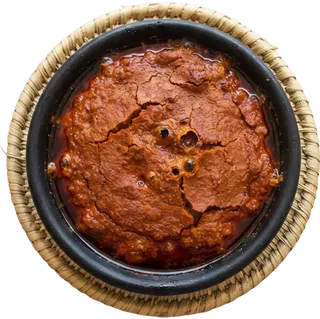
ፎሶሊያ (Fosolia)
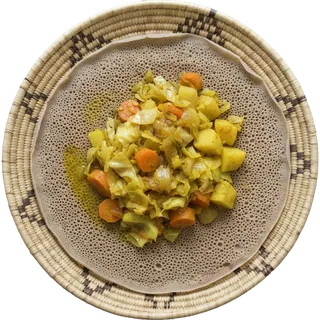
Green beans and carrot cut into finger lengths, cooked briefly with onion, garlic and tomato so the vegetables keep their bite rather than going soft. Served in Addis Ababa as one compartment on a mixed vegetable platter, alongside shiro and gomen, bought by the scoop at beyaynetu restaurants or made at home.
How to order
እባክዎ አንድ ፎሶሊያ የጾም ይሁን፣ ያለ ቅቤ፣ አመሰግናለሁ።
The sale runs in Amharic in Addis Ababa, at market stalls and at the counter of a beyaynetu restaurant. Asking for it “የጾም” (ye'tsom), the fasting kind, tells the cook to use oil rather than niter kibbeh; adding “ያለ ቅቤ” (yale kibe), without butter, covers it if the pan has not yet been started. If the dish is already cooked and resting on the platter, the fat is already fixed, and asking only confirms which one it was.
History
Fosolia takes its name from the Italian fagiolini, green beans, carried into Amharic food vocabulary during the Italian occupation of the 1930s and settled since into everyday kitchen use in Addis Ababa and other highland towns. Market vendors at Shola and Mercato sell the beans and carrots loose by the kilo; households and the cooks at beyaynetu restaurants trim them into short lengths, then cook them fast in a pan with chopped onion, garlic and tomato over high heat, so the vegetables stay firm rather than collapsing into a stew. It appears as one compartment among several on the round platter of vegetable dishes set out for lunch or dinner.
Everything in the pan is plant: beans, carrot, onion, garlic, tomato. The variable is the fat. Outside the Wednesday and Friday fasts and the long fasting periods of the Orthodox Tewahedo calendar, cooks in Addis Ababa most often start the pan with niter kibbeh, butter clarified with spices. On fasting days the same dish is made in vegetable oil instead, with no butter at any stage, and this is what most restaurants serve by default through those stretches of the calendar. What has to be settled when ordering on a non-fasting day is which fat the kitchen already used, since a pan started before the question is asked cannot be changed after the fact.
Where to get it
Beyaynetu restaurants and market stalls across Addis Ababa, including around Piazza and Mercato, sell it year-round as part of the mixed platter; a side portion runs roughly 20-40 ETB, a full platter 120-200 ETB.