ጋዓት (Gaat)
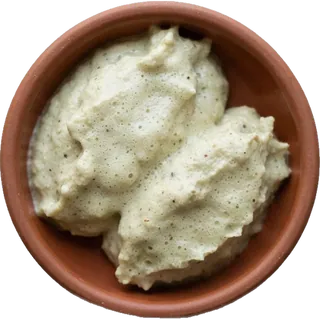
Barley, wheat or sorghum flour stirred into boiling water until it thickens into a stiff, elastic mass, then turned out onto a plate as a rounded mound with a well pressed into the top. Breakfast stalls and households across Tigray serve it in the morning, the well filled with spiced butter and berbere, or with oil on fasting days.
How to order
እባክዎ አንድ ጋዓት የጾም ይሁን ይስጡኝ።
The sale runs in Tigrinya at Tigray's breakfast stalls and markets, though Amharic, the federal working language, is understood at any counter. What needs settling is whether the well is filled with niter kibbeh or with oil, since that happens after the porridge is turned out, not during the stirring. On Wednesdays, Fridays and through the long fasts, the version marked “የጾም” (fasting) is usually already what is on offer, so there is nothing further to ask.
History
Gaat (ጋዓት) is the Tigrinya name for a stiff grain porridge made across Tigray, from Mekelle to Axum, Adwa and the highland villages of Adigrat. Cooks bring salted water to a boil in a metal or clay pot and beat in barley, wheat or sorghum flour in stages with a wooden stick, working it until it pulls away from the sides into a smooth, dense mass. It is turned out onto a plate or tin tray, shaped into a mound, and a well is pressed into the center with the back of a spoon. Breakfast stalls sell it in the morning, and households make it for the early meal before fieldwork.
The porridge itself is entirely plant: flour, water and salt, with no animal product involved in the stirring or the cooking. Animal product enters only at the well, filled with niter kibbeh, spiced clarified butter, together with berbere, once the gaat has been turned out onto the plate. On Wednesdays, Fridays and through the long fasts of the Orthodox Tewahedo calendar, households and most eateries fill the well with oil instead, so a gaat served on a fasting day is already plant-based as it reaches the table. Outside those days, the well has to be ordered filled with oil rather than butter, and since it is added at serving rather than during the stirring, the request is enough to change it.
Where to get it
Breakfast stalls, small eateries and household kitchens across Tigray, from Mekelle to Axum, Adwa and Adigrat, serve it year-round, most often in the morning, for roughly 15 to 30 birr a plate.