Isheba
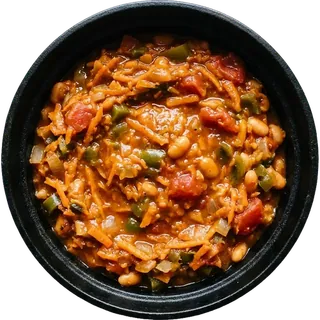
A loose, sharp tomato and onion relish, fried down with chilli and ladled over pap to give the dry maize porridge something wet to carry it. It is the cheapest, most-eaten sauce in South Africa, served from home kitchens to township hawker stalls at every meal of the day.
How to order
Ngicela isheba, ngaphandle kwenyama nesitoki, ngiyabonga.
Stock cubes and meat drippings go into the pot while it cooks, not at the table, so the only thing to confirm is whether the cook used either — ask with “Ngicela isheba, ngaphandle kwenyama nesitoki, ngiyabonga”. At many stalls the exchange itself runs in English, with the isiZulu understood but not required.
History
Isheba is the name in isiZulu for the loose tomato-and-onion relish spooned over pap, the maize porridge that anchors most meals in South Africa's black townships and rural homesteads. Onion is softened in oil, tomato is added and cooked down to a thin, sharp sauce, chilli goes in for heat, and the whole pot is ladled straight onto the pap so the dry porridge has something to carry it. It is cooked in home kitchens across Gauteng and KwaZulu-Natal and sold by the plate at spaza shops and hawker stalls near factories, taxi ranks and mine hostels, where migrant labourers under apartheid built their daily meal around exactly this combination.
The base is plant: tomato, onion, oil and chilli, simmered to a sauce with no need for meat to hold together. What turns the pot non-vegan is added at the cooking stage, not the table — a stock cube dropped in for extra savour, or a spoonful of drippings saved from a pan of fried meat, stirred into the tomato to deepen it. Both are common enough in home and stall cooking that a vegetable isheba has to be asked for specifically: whether the cook reaches for a stock cube or keeps the pot to oil, onion and tomato is the only question that needs settling before the plate is served.
Where to get it
Spaza shops and hawker stalls outside train stations and taxi ranks in Soweto, Tembisa, Durban's townships and rural KwaZulu-Natal, sold by the scoop alongside pap for R10 to R20 a plate, available from breakfast stalls through to evening.