Ting
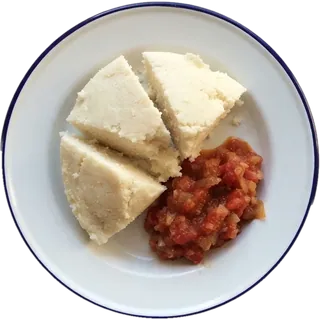
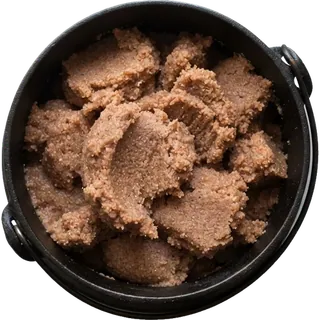
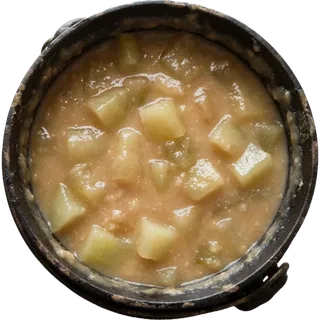
Sorghum meal is mixed with water and left to sour naturally for a day or two before being cooked into a soft, tangy porridge. It is a breakfast staple among Tswana households in North West, eaten plain or with soured milk.
How to order
Ke kopa ting ya mabele, tsweetswee, kwa ntle ga madila.
Asking for ting ya mabele already signals the sorghum porridge rather than a maize one. To keep madila or meat off the plate, add “kwa ntle ga madila,” without sour milk, or “kwa ntle ga nama,” without meat; counters in Gauteng's townships often run in English as much as in Setswana.
History
Ting takes its name from Setswana; the fuller name ting ya mabele marks the sorghum version, since maize meal can sour the same way, and speakers of the related Sepedi and Sesotho also call it ting. It is a Tswana staple from North West province, where sorghum, mabele, has been grown and ground at home for generations around Mahikeng and Vryburg. The meal is mixed with water in a clay pot and left uncovered for a day or two to sour, then boiled and beaten smooth. Migrant labour to Johannesburg's mines and townships carried the dish into Gauteng, where it is now made and sold far from its home fields.
Sorghum meal, water and the wild fermentation they produce together are the entire dish; nothing else has to go into the pot, and the porridge that comes off the stove is plant from start to finish. Where dairy enters is at the table, not the cooking: ting is often served with madila, naturally soured milk, spooned over the top, or set beside a meat stew such as seswaa. What has to be settled, then, is not the porridge itself but what is poured or plated alongside it — whether the madila or the meat comes as a side or stays off the plate entirely.
Where to get it
Home kitchens and informal breakfast stalls across North West province, around Mahikeng and Vryburg, where a bowl costs R10 to R15. In Gauteng it turns up at township eateries and taxi-rank food stalls in Soweto and central Johannesburg, mostly in the morning.