Morogo
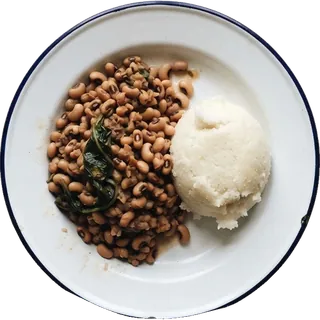
Gathered wild greens — amaranth, blackjack, pumpkin leaf, whatever the season turns up — cooked down with onion and tomato until soft, then spooned alongside stiff maize pap. Sold in loose bundles at roadside stalls and township markets across Limpopo, Gauteng and North West.
How to order
Ke kgopela morogo, hle.
To rule out butter or cream in the pot, ask “Ke kgopela morogo ntle le botoro, hle” — morogo without butter, please; at many roadside stalls and township markets the transaction runs in English as much as Sepedi, so asking in English works just as well.
History
Morogo is the Sepedi and Sotho-Tswana name for a category of gathered wild greens — amaranth (thepe), blackjack, pumpkin leaf and other species that come up after rain — rather than a single plant. Nguni speakers in the same provinces call the cooked dish imifino. Women and children gather it from maize-field margins and roadsides in Limpopo, Gauteng and North West, especially through the November-to-March rains, a pattern rooted in colonial and apartheid-era land laws that confined Sotho-Tswana communities to crowded reserves and townships where keeping large gardens or livestock was restricted. It is cooked at home and sold by the bundle at roadside stalls.
The greens themselves, the onion, the tomato, the salt and the oil they are fried in are all plant. Some cooks stir in peanut butter near the end, which stays within the plant pot and adds body. The one point where an animal product can enter is at the stove, not the table: some households finish the greens with a spoon of butter or cream instead of oil, for richness, before the pot ever reaches a plate. What needs settling, then, is not the greens or the peanut butter but whether butter or cream went in during cooking.
Where to get it
Roadside stalls, township markets and spaza-shop fronts in Limpopo (Polokwane, Seshego, Tzaneen), Gauteng townships such as Soweto and Mamelodi, and North West towns like Rustenburg and Mahikeng, sold loose by the bundle from early morning until stock runs out, heaviest from November to March after the rains; a bundle runs about R5 to R10.