Dinawa
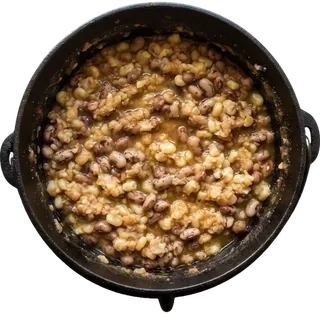
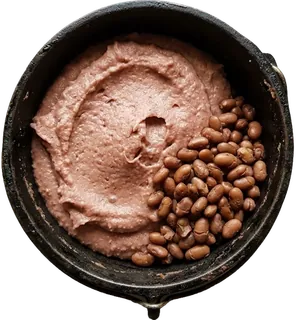
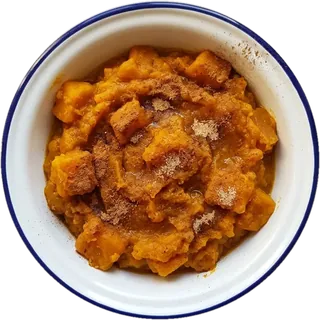
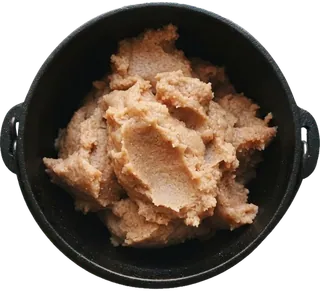
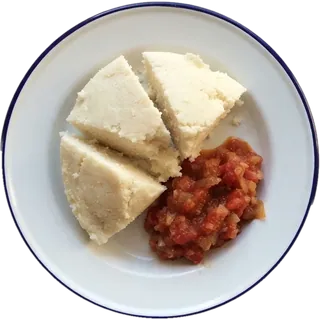
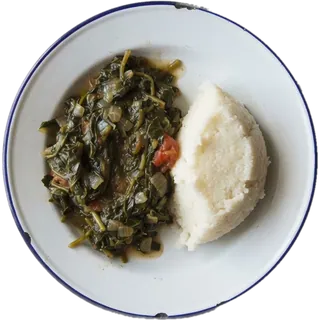
Cowpeas are boiled until soft in salted water, sometimes mashed together with their own young leaves, and spooned beside maize porridge at the everyday plate across the North West and Limpopo. The dish is eaten at midday, often in summer when the leaves are still tender enough to pick.
How to order
Ke kopa dinawa, ntle le botoro, tsweetswee.
The dish itself needs no asking, since it is usually only cowpeas, water and salt; what to confirm is whether butter or sour milk went into the pot, or lard into the morogo served beside it, using “Ntle le botoro kgotsa madila, tsweetswee” — without butter or sour milk, please. Most eateries in the North West and Limpopo that serve dinawa run the counter in Setswana, with English understood in the towns.
History
Dinawa is the Setswana word for beans, and here it names the cowpea — grown in the region long before sugar beans and other introduced varieties arrived with colonial agriculture. Sesotho and Sepedi, close relatives of Setswana, use the same word for beans. Households across the North West and Limpopo grow the crop intercropped with maize and sorghum in summer, leaving the pods to dry on the plant before storage. Cooked dinawa, plain or mashed with its own leaves (morogo), is part of the daily plate, served beside maize porridge at lunch through the growing season and after harvest.
The beans themselves are plant throughout: cowpeas, water and salt, sometimes the cowpea's own leaves stirred through at the end. Nothing in the pot requires an animal product. Where it can enter is at the table or in a cook's own habit — a spoon of butter or sour milk (madila) stirred into the beans for richness, or lard used in the morogo that often goes with them. That addition is a matter of habit, not recipe, so it is the one thing to ask about before the pot is served.
Where to get it
Village and township eateries, church and funeral gatherings, and home kitchens across the North West and Limpopo, around towns like Mahikeng, Taung and Polokwane; cowpeas are harvested from April through June and sold dried by the cup or bag at local markets, with a plate of dinawa and porridge running about R20 to R30 at a local eatery.