Mageu
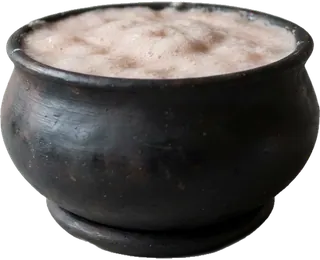
A thin maize porridge left to ferment into a sour, lightly fizzy drink, made at home with nothing but meal, water and time. Sold in cartons at garages nationwide, it is an everyday refreshment across KwaZulu-Natal, Gauteng and Limpopo.
How to order
Ngicela amahewu angafakwanga ubisi, ngiyabonga.
At garage and convenience-store tills, which mostly run in English, the question is settled by reading the carton rather than asking: cartons that list milk powder or whey are not the home-made kind. At a market or roadside stall selling amahewu by the cup, ask directly: “Ngicela amahewu angafakwanga ubisi, ngiyabonga,” I would like amahewu without milk added, thank you.
History
Amahewu is the isiZulu name for this soured maize drink; mageu, the title used here, is the spelling on commercial cartons and the term that crosses language lines, alongside Sesotho and Setswana use and Afrikaans mahewu. The thin maize porridge is cooked, cooled, then started with raw maize meal or wheat bran and left a day or two to ferment into something sour and lightly fizzy. It is an everyday drink in KwaZulu-Natal and Limpopo, and in Gauteng it travelled with migrant mineworkers recruited to the Witwatersrand gold mines under the colonial and apartheid-era migrant labour system, who drank it on shift for a cheap, filling lift.
The base is maize meal, water and time: meal cooked into porridge, thinned, and left to sour with nothing added but a starter of more meal or bran. That is the whole of the home-made drink, made in kitchens and at rural homesteads with no animal product anywhere in the process. Commercial cartons are a different matter: some producers add milk powder or whey to thicken the drink or round out the taste, folded in during manufacture rather than at the table. A buyer working from a carton has to read the ingredients list; a buyer at a stall or a kitchen can ask the cook directly.
Where to get it
Garage forecourts, spaza shops and supermarket fridges across the country keep commercial cartons cold year-round, a carton running eight to fifteen rand; home-made amahewu turns up by the cup at township and rural markets in KwaZulu-Natal and Limpopo, usually cheaper.