Morama
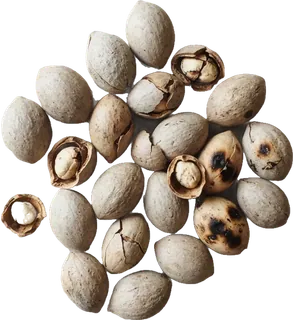
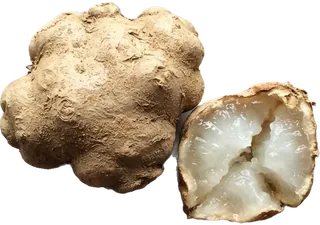
A wild bean gathered from a Kalahari vine whose tuber stores water for years of drought, the seed roasted in hot sand and cracked open or ground to a paste. Communities across the Northern Cape and North West eat it as a snack or stir it into maize porridge.
How to order
Ke kopa morama, tsweetswee.
Morama itself is just the roasted or ground seed; the only thing to check is whether milk or butter has been stirred into a porridge version, which can be settled by asking “ke kopa kwa ntle ga lebese le botoro, tsweetswee” — I ask without milk or butter, please. Counters in the Kalahari towns of the Northern Cape and North West often run in a mix of Setswana and English.
History
Morama is the Setswana name for the seed of Tylosema esculentum, a vine that spreads across the sand of the Kalahari in the Northern Cape and North West. Its single tuber swells underground to the size of a grain sack, storing enough water to keep the plant alive through years of drought. Khoe, San and Tswana-speaking families have gathered the pods by hand after the late-summer rains for generations, roasting the seeds in hot coals or sand and grinding them into a paste eaten with maize porridge. Colonial-era dispossession of Kalahari land cut many families off from the grounds where the vine grows wild.
The seed itself is entirely plant: nothing but morama, roasted or ground, goes into the basic preparation. The only place an animal product can enter is at the table, where some cooks stir morama paste into maize porridge along with milk or a spoon of butter, or mix it with sour milk as a relish. None of that happens in the roasting or grinding itself, so what has to be settled is simply whether milk or butter went into the serving bowl, not whether it touched the seed.
Where to get it
Roadside tables, spaza shops and local markets in Kalahari towns of the Northern Cape and North West, such as Kuruman and Vryburg, sell morama by the cup or small bag after the March-April harvest, usually for a few rand a handful.