Mongongo
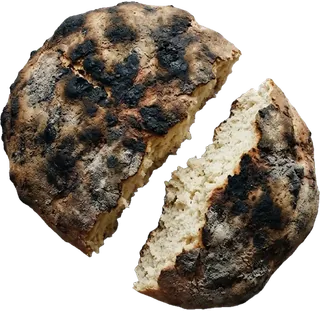
The hard-shelled nut of the manketti tree, cracked between two stones and roasted over coals until the kernel loosens from its shell. Juǀʼhoansi families in the Kalahari gather it in late summer and autumn, when fallen fruit collects beneath the trees in the dunes of the Northern Cape's border country.
How to order
Kan ek asseblief 'n sakkie manketti-neute kry?
Nothing needs confirming, since a manketti nut is nothing but a roasted kernel in its shell; the phrase above is enough to ask for a bag, and at the craft stalls where they are sold the conversation often runs in English rather than Afrikaans.
History
Mongongo, known in Afrikaans as the manketti nut, is the seed of Schinziophyton rautanenii, a hardwood that grows across the Kalahari sandveld from the Northern Cape into Botswana and Namibia. Juǀʼhoansi San families gather the fallen fruit from beneath the trees from late summer into autumn, strip the outer pulp, and crack the woody shell between two stones to free the kernel, which is then roasted on coals or ash. The nut has long served as a dietary staple in years when game and other wild foods are scarce, and it drew sustained attention from anthropologists studying San diet and foraging in the twentieth century.
The nut is wholly plant: kernel, shell and roasting over coals, nothing more. No animal product enters the dish at any stage, whether gathered and eaten on the spot in the veld or carried home to be shelled and roasted at the fire. There is nothing for a buyer or cook to settle, since mongongo contains and has only ever contained the one ingredient.
Where to get it
Community craft stalls and cooperative shops around Askham, Witdraai and Rietfontein on the ǂKhomani San lands bordering the Kgalagadi Transfrontier Park, sold by the bag after the summer and autumn harvest, for the price of a few rand a handful.