Jiguang Bing
Jiguang bing is a flat, chewy wheat ring with a hole through the middle, lightly salted, studded with sesame and baked against the wall of a charcoal oven. In Matsu it is known as the salt cake.
How to order
老闆,兩個繼光餅,不要夾料。
The dough has no lard or egg in it, so the only question is what goes inside: say '不要夾料' for the plain ring, since the default in Matsu is now to split it and fill it with pork, oyster or omelette.
History
The bread is named for the Ming general Qi Jiguang, who campaigned against pirates along the Fujian and Zhejiang coast; the account repeated in Matsu and in Fuqing is that it was made as marching rations, pierced so a string of them could be hung round the neck. Matsu kept the Fujianese method. Flour is salted and kneaded, leavened with an old-dough starter for five to eight hours depending on the season, shaped into rings, patted with sesame and slapped onto the inner wall of a charcoal oven held near two hundred degrees, about fifty at a time. Islanders carried them onto the Taiwan ferry as food for the crossing.
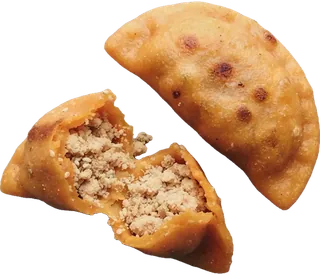
The ring itself is flour, salt, water and sesame, which is what packets from Matsu bakeries list; the rise comes from an old-dough starter rather than egg, and no fat is worked into the dough, which is why it keeps as dry rations. The animal ingredient enters after baking. The bread is now split and filled as the Matsu burger, with pork, fried oyster, omelette or chopped greens, and some shops deep-fry the rings instead of baking them. Asked for plain and uncut, it is bread, salt and sesame.
Where to get it
Baked on Nangan at 寶利軒 in Shanlong, the village also known as Jieshou, which is recorded as the island's charcoal-oven maker and has been working since 1973; also sold at breakfast stalls around the Jieshou Lion Market and taken onto the Taiwan ferry.