Jolada Rotti
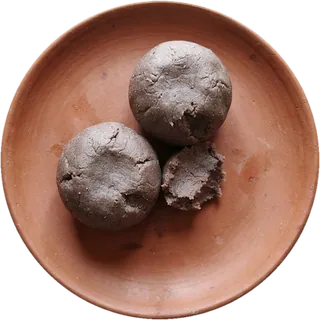
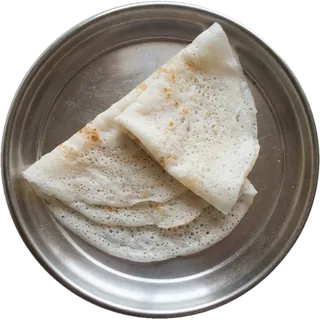
Jolada rotti is an unleavened sorghum flatbread patted paper-thin by hand and cooked until dry and firm, the everyday grain bread of Dharwad and the wider north Karnataka plateau, where jowar rather than wheat or rice has long been the staple cereal, served alongside pulse sides and chutneys.
How to order
ದಯವಿಟ್ಟು ಎರಡು ಜೋಳದ ರೊಟ್ಟಿ ಕೊಡಿ.
The rotti itself is always plant-based, but the side dishes served with it often are not; asking ‘ಪಲ್ಯಕ್ಕೆ ತುಪ್ಪ ಹಾಕಿದ್ದೀರಾ?’ (have you put ghee in the vegetable side?) before ordering confirms whether the accompanying palya is dairy-free.
History
Households across Dharwad, Belagavi, Gadag, Haveri and Vijayapura districts make jolada rotti from jowar flour mixed with hot water and salt, kneaded and patted directly by hand into thin discs on a cloth or board, since no rolling pin is used for the thinner north Karnataka style. The dough is cooked on a flat iron griddle over an open flame, pressed and turned until it dries hard enough to store for a day or more. In Dharwad it is sold hot at roadside stalls each morning alongside jowar-based sides, and it remains the grain eaten daily in the region in place of rice or wheat chapati, documented as the staple bread of the Bombay-Karnataka plateau through the twentieth century.
The standard recipe uses only jowar flour, water and salt, with no dairy, ghee or other animal ingredient at any stage of mixing or cooking, which keeps jolada rotti naturally vegan as eaten across north Karnataka. The dish is typically served with a pulse-based side such as yenagayi or shenga chutney, and it is these accompaniments rather than the rotti itself that most often carry ghee or curd; diners wanting a fully plant-based meal should check the sides served alongside it rather than the rotti, which contains none to begin with.
Where to get it
Sold at breakfast and lunch stalls, small messes and home-style eateries across Dharwad and Hubballi, and made daily in home kitchens throughout the Dharwad-Belagavi-Gadag belt, often stacked ready-made at jowar-rotti counters in local markets.