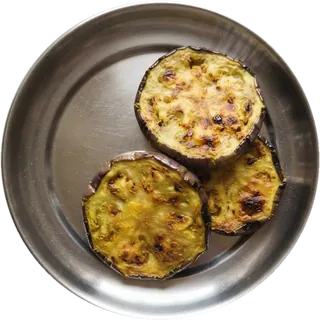
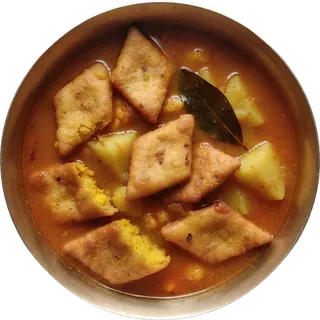
Khar
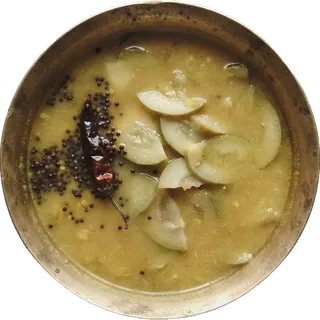
Khar is a savoury course of raw papaya, potato and pulses simmered in kolakhar, a filtrate strained from the ash of burnt sun-dried banana peel, eaten in Assamese households around Jorhat as the opening dish of a meal.
How to order
অনুগ্ৰহ কৰি এবাটি খাৰ দিয়ক
Ask the counter ‘ইয়াত ঘিউ বা দৈ দিয়া হৈছেনে?’ — whether ghee or curd has gone into this one — and check that it is the vegetable khar and not the fish or duck version made in the same pan.
History
Khar is cooked across the Brahmaputra valley, with Jorhat households among those who keep the practice closely tied to everyday meals and to Bihu gatherings. The dish is named for its defining ingredient, kolakhar, made by burning dried banana peel to ash and straining water through it to draw out the alkaline liquid. That liquid is simmered with raw papaya, potato, and often matikolai (black gram) or other pulses in mustard oil. In the standard Assamese thali it is served first, before dal and rice, and eaten with the hands.
The vegetarian khar made with papaya, potato and pulses contains no animal ingredient at any stage; the alkaline filtrate, the vegetables and the mustard oil are all plant-derived. A diner still has reason to ask before eating it outside the home: some households finish the dish with a spoon of ghee at serving, a curd-based side may share the same thali and utensils, and fish khar and duck khar, cooked in the same alkaline base, are sold under the same name in many Assamese messes and restaurants.
Where to get it
Served in Assamese household kitchens and at Jorhat eateries and mess-style restaurants as the first course of a thali, and prepared in quantity at Bihu gatherings and community feasts.