Ou Tenga Dal
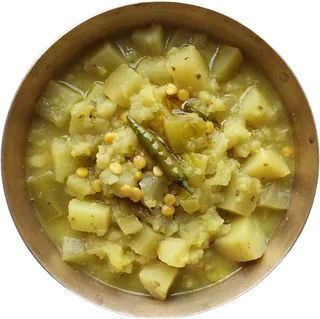
A thin split-pea or lentil dal cooked in Assam households, soured with slices of ou tenga — elephant apple — and tempered with panch phoron in mustard oil, giving a sour, fresh, earthy broth eaten with rice.
How to order
অনুগ্ৰহ কৰি এবাটি ঔ টেঙা দাইল দিয়ক।
Ask whether ghee has been added or whether a fish version is being served instead, using ‘ঘিউ দিছেনে?’ (have you added ghee?), since both variations circulate under similar names.
History
Ou tenga dal is cooked in Assamese households across the Brahmaputra valley, where elephant apple (Dillenia indica) ripens in the monsoon months of July and August and is sold in local markets alongside other seasonal sours. Cooks add thin slices or wedges of the fruit to a thin dal of moong or masoor lentils, letting it soften and release its acidity instead of using tamarind or lime. A tempering of panch phoron — fenugreek, nigella, cumin, mustard and fennel seeds — is fried in mustard oil and stirred in just before serving. The dish is recorded in Assamese home-cooking manuals and is standard at midday meals, not a festival or temple preparation.
The standard recipe contains no animal ingredient: the dal is lentils and water, the souring agent is the fruit itself, and the tempering fat is mustard oil rather than ghee. A diner should still check two points in practice — some households finish the dal with a spoon of ghee at the table, and some roadside messes serve an ou tenga preparation made with fish instead of dal under a similar name. Asking whether ghee has been added, or whether the dish on offer is the dal version rather than the fish one, is worth doing before ordering.
Where to get it
Served in Assamese homes and at small eateries and messes across Upper and Lower Assam, especially during the monsoon season when elephant apple is in the market, alongside rice at midday meals.