Kollof
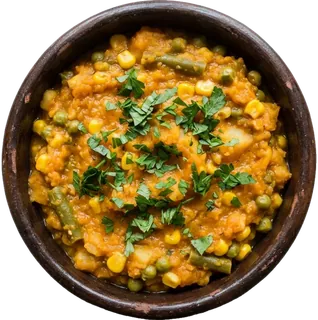
Bull kelp, cut from coastal rocks at low tide and sun-dried into dark plaits, is soaked and simmered until tender, then stewed with potato or fried into fritters; markets from Tirúa to Chiloé sell it by the bundle.
How to order
¿Me podría dar la ensalada de cochayuyo sin huevo, por favor?
Dried cochayuyo bundles sold at market stalls need no question, since the kelp itself is plant only. At a market eatery or fonda serving it as salad or fritters, confirm the kitchen hasn't worked egg or lard into the batter or stew base by asking “¿Sin huevo, por favor?” The counter at most coastal ferias and the Castro market runs in Chilean Spanish, whatever the stallholder's own language at home.
History
Kollof is the Mapudungun name for bull kelp, Durvillaea antarctica, cut from rocks at low tide along the coasts of Biobío, Araucanía and Los Lagos, around Tirúa, Puerto Saavedra and the beaches of Chiloé. Harvesters, many of them Mapuche and Williche families, prise the holdfasts loose with hooked poles or by hand, spread the fronds to dry on rocks or racks, and twist them into dark plaits for market. Chilean Spanish calls it cochayuyo, a name borrowed from Quechua qucha, sea, and yuyu, weed. Chile's nineteenth-century occupation of Wallmapu pushed many Mapuche families back from stretches of this coast, though harvesting continued on the beaches that stayed within reach.
Kollof is seaweed: nothing in the plait but kelp, sun and salt air. Soaked for a day and boiled until tender, it goes into potato stews, salads with onion and tomato, or fritters bound with egg and flour, and egg is where an animal product most often enters, at the mixing bowl rather than at the table. A plain cochayuyo salad or a potato-and-kelp stew is usually built on the kelp alone, so what needs checking before ordering is simply whether the kitchen's fritter batter uses egg, and whether lard went into the stew.
Where to get it
Coastal ferias and market stalls in Tirúa, Puerto Saavedra and the Mercado Municipal de Castro in Chiloé sell dried cochayuyo by the bundle year-round, with heavier stock after the summer harvest; a bundle runs CLP 1,500-3,000, and a prepared salad or stew plate at a market eatery costs CLP 3,000-5,000.