Mebos
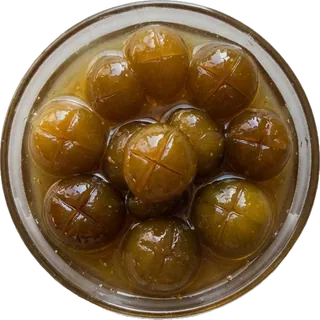
Apricots are halved, pitted, salted and sun-dried, then pressed flat into a chewy, wrinkled sheet, sometimes rolled in sugar. Montagu, in the Little Karoo, supplies most of South Africa's mebos, sold at farm stalls along Route 62 as a travel snack and padkos.
How to order
Ek wil graag 'n sakkie mebos koop, asseblief.
There is nothing to clear with the seller, since apricots, salt and sugar are the whole recipe and no animal product touches the fruit at any stage; someone who wants the plain version can ask for "mebos sonder suiker, asseblief," mebos without sugar. Many padstals along Route 62 run their counters in English as readily as Afrikaans.
History
Mebos is Afrikaans, and the name traces to the Japanese umeboshi, a salted dried plum, carried to the Cape by Dutch East India Company ships trading between Batavia, Japan and the Cape of Good Hope. The fruit itself is local: apricots from the orchards around Montagu in the Little Karoo, picked each December and January, halved, pitted and sun-dried, then salted and pressed flat into sheets, sometimes finished with sugar. Those orchards were worked for generations by Coloured farm labourers under tied-cottage tenancies and later apartheid labour laws, and mebos remains a Little Karoo farm product sold at padstals along Route 62.
Everything in mebos is plant: apricots, salt and, in the sugared version, sugar. No animal product enters at any point in the drying, salting or rolling, and none is added at the farm stall or shop counter either. The only variable worth naming is the sugar coating some producers use to finish a batch, which is a matter of recipe rather than animal content, so a buyer wanting the plainest version need only ask for mebos without the sugar dusting rather than worry about what went into the drying itself.
Where to get it
Farm stalls and padstals around Montagu and along Route 62 in the Little Karoo, sold loose by weight or packed in small bags, stocked year-round from fruit dried after the December-January apricot harvest, at a few rand per 100 grams.