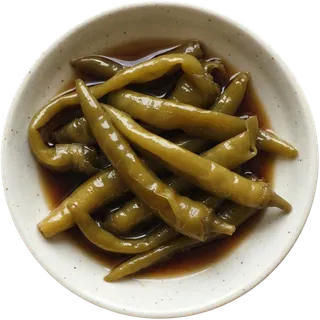
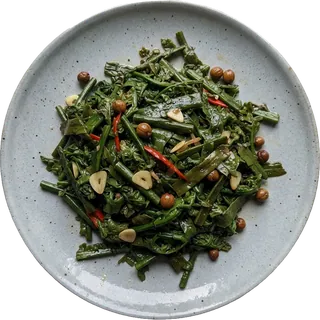
Mianbaoguo
Mianbaoguo is breadfruit, called facidol or pacilo in Amis, peeled and simmered until the flesh turns soft and translucent. It is a summer dish in the Amis villages of Fengbin Township on the Hualien coast.
How to order
老闆,麵包果湯不要加小魚乾,謝謝。
The dried fish go into the water at the very start, so the broth has to be made without them; say 「麵包果湯不要加小魚乾」 and check it is not a pork-rib or chicken stock instead.
History
Breadfruit trees stand beside houses and field edges throughout the Amis villages of the East Rift Valley and the Hualien coast, and the fruit ripens in July and August. It cannot be eaten raw. The skin runs with a gluey latex, so the fruit is peeled with an oiled knife or after a night in the fridge and the pieces are held in water until they go into the pot. The core is cut out, the flesh is simmered until it is nearly collapsing, and the pale seeds, which taste like peanuts, are boiled longer or dry-roasted separately. In Fengbin, where the Amis name for the island at the Hsiukuluan river mouth is Lokot, the soup is ordinary summer food.
The pot is starch and water, and a version made with nothing but breadfruit, water and salt is documented as the plain way to cook it. The animal ingredient is the stock: the usual household soup starts by boiling small dried fish, and restaurant versions often use pork ribs or chicken stock instead. Both are there for salt and savour, which sweet potato, ginger and a little soy sauce supply instead; a sweet version simmers the flesh with mung beans and no stock at all. Asking for the soup cooked plain, without dried fish, is the thing to say.
Where to get it
Sold in July and August at roadside and market stalls in Hualien, often already peeled, and cooked at home and in village kitchens along Provincial Highway 11 through Fengbin Township; the trees fruit only in summer, so it disappears by autumn.