Moutarde Violette de Brive
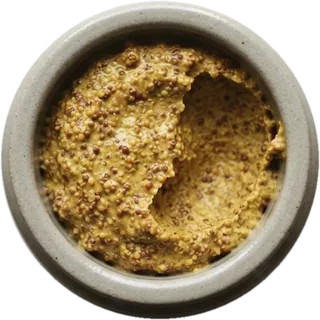
Ground mustard seed is mixed with grape must instead of vinegar, which stains the paste violet and softens the heat. It is made around Brive-la-Gaillarde, in Corrèze, and sold year-round at the Saturday market and in Limousin épiceries.
How to order
Un pot de moutarde violette de Brive, s'il vous plaît.
Nothing needs asking: the recipe is mustard seed, grape must, salt and spice, and no commercial or home version adds egg, dairy or animal fat. Order it simply with “Un pot de moutarde violette de Brive, s'il vous plaît.”
History
Moutarde violette de Brive is made around Brive-la-Gaillarde, in Corrèze, by grinding mustard seed with grape must in place of vinegar, which stains the paste a deep violet and rounds off the sting. Local tradition credits it to Pope Clement VI, born Pierre Roger near Rosiers-d'Égletons in Corrèze, who is said to have had it made for him after he left for Avignon in the fourteenth century. The vineyards around Brive that once supplied the must were largely wiped out by phylloxera in the late nineteenth century, and producers today often bring the must in from vineyards further south.
Mustard is a seed condiment first: mustard seed, grape must, salt and spice, with nothing dairy, egg or animal fat anywhere in the method, unlike the butter-based sauces and lard-fried dishes it often sits next to on a Corrèze table. The must itself is unfermented grape juice, pressed and used before any wine-making step such as fining with gelatin or isinglass comes into play, so none of that enters the jar either. Moutarde violette de Brive needs nothing asked for and nothing left out; the recipe has stayed the same seeds, must, salt and spice it always was.
Where to get it
Épiceries and the Saturday market in Brive-la-Gaillarde, Corrèze, plus the Denoix shop in the same town, which has made it since 1839. A jar runs about 4 to 6 euros and is sold throughout the year, not only at Christmas markets.