Patay
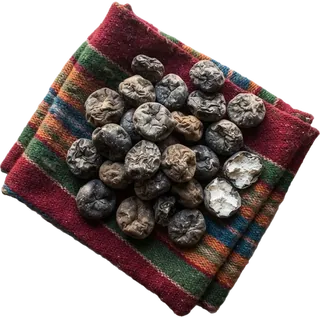
Algarrobo pods are dried, ground to a sweet pale flour, and pressed by hand into hard cakes that keep for a year. Aymara and Lickanantay families of Chile's far north have eaten it since before wheat arrived, carried on herding trips between Arica, Pica and the Atacama oases.
How to order
¿Me vende un trozo de patay, por favor?
There is nothing to clear with the seller: patay is pressed pod and nothing else, with no animal-derived stage to ask about. Markets in Arica, Camiña and Pica run the counter in Chilean Spanish, though Aymara and Lickanantay stallholders sometimes call the cake by other names.
History
Patay is a Quechua word, carried into the Aymara and Lickanantay communities of Chile's far north along Andean trade routes. Pods are gathered from algarrobo trees in oases and ravines — Azapa, Camiña, Pica, the groves around San Pedro de Atacama — usually in late summer, when they ripen and drop. Dried pods are pounded in a wooden mortar to a fine, sweet flour, moistened, pressed by hand into flat cakes, and sun-dried until hard; a cake keeps a year and travelled with herders crossing the altiplano. Nitrate-era furnaces burned algarrobo for fuel in the late 1800s, thinning forests that took centuries to regrow.
Patay has no animal ingredient at any stage: algarrobo pods are the whole dish, ground to flour and pressed with water into cakes, with nothing baked, fried, or added for binding. Some market versions mix in a portion of chañar pods or a pinch of salt, which are plant and mineral, not animal. There is no cooking stage at which meat, lard or dairy could enter, and no serving custom that adds them at the table; the only question worth asking a seller is whether a batch is pure algarrobo or cut with another pod.
Where to get it
Feria libre stalls and small grocers in Arica, Camiña, Pica and San Pedro de Atacama, sold by the cake or by weight year-round, with fresh batches heaviest right after the late-summer algarrobo harvest; a cake runs roughly CLP 1,500-3,000 depending on size.