Petka
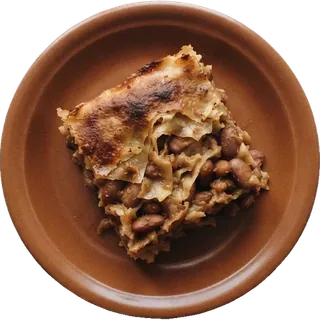
Small squares cut from a flour dough are dried for weeks before cooking, then simmered with onions, peppers or whatever vegetables are at hand, in oil, until they soften into a thick stew. It is made through the winter in the Aromanian villages above Korçë, among them Voskopojë, from dough dried in autumn stores.
How to order
Një pjatë petka pa vezë dhe pa gjalpë, ju lutem.
Ask for the dough made without egg and the pan finished in oil rather than butter, saying “pa vezë dhe pa gjalpë”. Petka is mostly cooked at home rather than sold ready-made, so this means asking before the dough is mixed; squares already rolled and dried with egg cannot be changed afterward.
History
Petka is made in the Aromanian villages of the Korçë highlands — among them Voskopojë, Vithkuq, Nikolicë and Shipska — where dough is cut into small squares and dried on cloth through the autumn, then stored with the rest of the zahire, the household's winter provisions. Voskopojë was once the largest town in the southern Balkans, with printing presses and dozens of churches, before it was sacked in the eighteenth century and its population scattered into the surrounding villages. The dish stayed a household matter rather than a market one, cooked through winter a handful of dried squares at a time, with whatever vegetable the cellar held.
The base recipe is plant throughout: flour and water for the dough, vegetables and olive or sunflower oil for the cooking liquid. Most households add an egg (vezë) to the dough to make it firmer for cutting and drying, and finish the pan with a spoonful of gjalpë, butter, stirred through once the squares have softened. Both are additions at the cooking stage, not at the table, so what needs settling is the dough itself and what goes into the pan — a household making petka without egg, and finishing it in vaj instead of gjalpë, keeps it plant-based throughout.
Where to get it
In the Aromanian villages above Korçë — Voskopojë, Vithkuq, Nikolicë — it is a home dish rather than one sold in restaurants, cooked through the winter months from dough dried in autumn. It turns up occasionally at Korçë guesthouses serving Aromanian home cooking, for 200-300 lekë a plate.