Polenta Brustolada
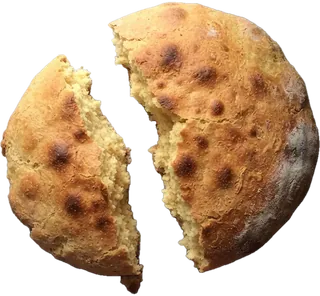
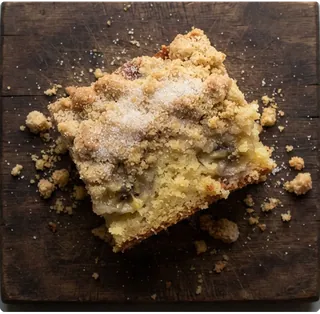
Firm cornmeal polenta cut into slabs and grilled dry over embers or a hot iron plate until the surface blisters and chars, eaten with the hands in the Talian-speaking towns of the Serra Gaúcha. Found at cantinas coloniais and roadside churrasco stands, it is served plain, under grated cheese, or under a ladled meat sauce.
How to order
Me vê uma polenta brustolada sem queijo e sem molho de carne, por favor, bem simples mesmo.
The sale runs in Portuguese even in Talian-speaking towns, so “sem queijo” and “sem molho de carne” covers the order at the counter. Cheese is added slab by slab and is easy to skip; the molho de carne, started hours earlier with linguiça or ground beef, cannot be changed once ladled, so the real question is whether a vegetable or tomato sauce exists as an alternative, or whether the slab comes plain.
History
Polenta brustolada takes its name from brustolar, "to toast" in Talian, the Venetian-derived language spoken by descendants of Italian immigrants across the Serra Gaúcha in Rio Grande do Sul and the Italian-settlement towns of Santa Catarina. It is made in family kitchens and cantinas coloniais around Monte Belo do Sul, Bento Gonçalves and Garibaldi: maize meal is cooked into a stiff mush, poured into a tray, left to set and cool, then cut into slabs and laid over wood embers or a hot metal plate until the crust blisters and darkens. It is sold at harvest-season festas, roadside churrasco stands and colonial restaurants through autumn and winter, usually alongside grilled meats.
The polenta itself is maize meal, water and salt, worked over heat until it sets, with no animal product entering before it reaches the grill. What follows the grilling is where the question opens: a maker may grate queijo colonial over the hot slab, or ladle a molho de carne, a tomato-based sauce started hours earlier with linguiça or ground beef, across it. Cheese is added slab by slab and can be left off on request. The meat sauce is a different matter: once a batch has simmered with meat, asking for it without meat changes nothing, so the working question is whether a vegetable or plain tomato sauce exists as an alternative, or whether the slab is served bare.
Where to get it
Cantinas coloniais, roadside churrasco stands and festa stalls around Monte Belo do Sul, Bento Gonçalves and Garibaldi in the Serra Gaúcha, and in Italian-settlement towns of Santa Catarina, sell it through the cooler months, typically R$10-20 a portion.