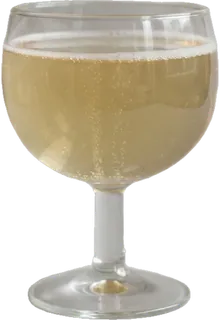
Ratafia de Champagne
Unfermented grape must is stopped with marc de Champagne before it can ferment, then aged in oak casks for a year or more until it turns amber. Growers in the Marne pour it as an apéritif, often to welcome visitors into the cellar.
How to order
Un verre de ratafia, s'il vous plaît.
At a grower's cellar, ask before buying: “Le ratafia est-il collé à la gélatine, au blanc d'œuf ou à la colle de poisson ?” Many Marne growers now fine with bentonite, a clay, and will say so directly; where an animal fining agent is already in the bottle, nothing can change it afterward.
History
Ratafia de Champagne is made in the vineyard villages of the Marne, from Ay to Hautvillers to Verzenay, by the same growers who make champagne. Part of the first-press juice is set aside before it reaches the fermentation tank, mixed with marc de Champagne, the local pomace brandy, to stop fermentation before it starts. The blend is aged in oak casks for a year or more, sometimes several years, until it darkens to amber and picks up the tannin of the wood. It is a grower's drink more than a commercial one, poured at the end of the harvest and offered to visitors touring the cellar, rather than bottled for wide export.
Ratafia's base is entirely plant: grape must and marc, both pressed from the same vines. The question is fining. Growers often clarify the must, or the base wine used to distil the marc, with gelatin, egg white or isinglass — fish bladder — to pull out haze before bottling, and once that has happened the agent cannot be removed from the finished ratafia. Some cellars fine with bentonite, a clay, instead, which leaves the drink entirely plant-based. Since ratafia is bought as a finished bottle rather than made to order, the only way to know is to ask the grower directly, before buying.
Where to get it
Growers' cellars (caveaux) in the vineyard villages of the Marne — Ay, Hautvillers, Verzenay, around Épernay — where ratafia is sold alongside champagne at the cellar door, usually by appointment or during open-cellar weekends in autumn. A 75cl bottle runs roughly €10-€18.