Tacacá
Tucupi broth, extracted and boiled from wild cassava root, poured hot over tapioca gum and jambu leaves inside a gourd cuia. Tacacazeiras serve it from clay pots at street corners in Belém and Manaus from late afternoon into evening, drunk standing, with dried shrimp dropped in at the final pour.
How to order
Um tacacá pra mim, sem camarão, por favor.
The transaction runs in Portuguese at the banca. Saying “sem camarão” before the tacacazeira fills the cuia is what matters, since the dried shrimp goes in at the final pour, not into a pot started earlier. Asking after the gourd is handed over changes nothing, as the shrimp is already in the broth by then.
History
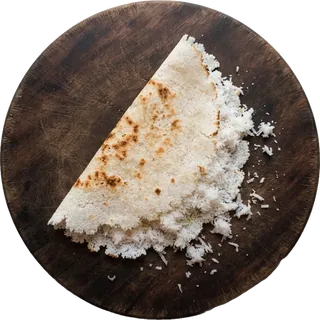
Tacacá is Portuguese, from a Tupi or Nheengatu root naming the soup, served in Belém do Pará and in Manaus, Amazonas. Tucupi, the sour-yellow juice pressed from wild cassava (mandioca brava), is boiled for hours to clear the cyanogenic compounds, then seasoned with garlic and salt. Goma, a thick tapioca starch gum, and jambu leaves (Acmella oleracea), whose chewing produces a numbing, tingling sensation on the tongue, go into a cuia gourd before the hot tucupi is poured over. Tacacazeiras set up bancas on street corners at dusk, ladling the broth from large clay pots kept over low heat, selling through the evening into the night.
Tucupi, goma and jambu leaves are entirely plant: cassava juice, tapioca starch and a cultivated leaf, no broth bones or stock involved at any stage of boiling or seasoning. The one animal product is dried shrimp (camarão seco), dropped whole into the cuia at the moment of serving, after the tucupi has already been poured, so a tacacazeira can leave them out if told before she fills the gourd. What has to be settled, then, is timing: asking after the cuia is handed over does not help, since the shrimp goes in during the pour itself, not stirred into a pot hours earlier.
Where to get it
Street-corner bancas de tacacá in Belém's bairros (Nazaré, Cidade Velha, Reduto) and in Manaus operate from late afternoon into night, year-round, for about R$8 to R$15 a cuia.