Vinho de Bacaba
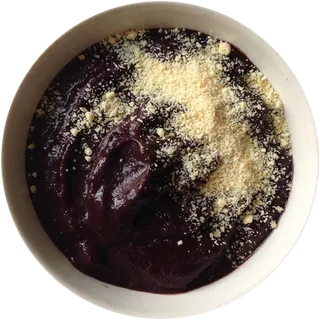
Bacaba palm fruit, soaked in warm water until the skin softens, then rubbed by hand to separate the thin layer of pulp from seed and fiber, producing a thick, pale lilac drink. Sold in bottles at markets and street stalls across Pará, Amapá and Amazonas, usually alongside açaí, drunk plain or with sugar and tapioca.
How to order
Me vê um vinho de bacaba bem gelado, sem açúcar, pode ser?
The only thing to settle is sugar, since the drink itself is only bacaba fruit and water; asking for it “sem açúcar” (without sugar) or “bem gelado” (very cold) covers it. The sale runs in Portuguese at markets and street stalls across Pará, Amapá and Amazonas. Nothing else needs checking, since no animal product enters at any stage of the soaking, rubbing or straining.
History
Vinho de Bacaba takes its name from Portuguese "vinho" (wine, here meaning a thick fruit drink) and "bacaba", a word of Tupi origin naming the palm Oenocarpus bacaba, common across the lower Amazon. The fruit ripens in clusters on tall palms found in terra firme forest across Pará, Amapá and Amazonas, harvested by climbing or felling the bunches. Riverine households and smallholders soak the fruit in warm water until the thin mesocarp softens, then rub it by hand or against a sieve to separate pulp from seed and fiber, straining the result into a thick, pale liquid. It is sold in bottles and jugs at markets such as Ver-o-Peso in Belém and at stalls in Macapá and Santarém, typically in the dry season when fruiting peaks, alongside açaí and other palm drinks.
The drink is made entirely of bacaba fruit and water: no stock, fat or dairy enters the soaking, rubbing or straining. Vendors sometimes stir in sugar, and the drink is commonly poured over tapioca or farinha at the table, both plant. Because nothing animal is used at any stage of this preparation, there is nothing to settle when buying beyond how much sugar, if any, goes in. This separates vinho de bacaba from many other dishes sold in the same markets, where lard, dried shrimp or a stock cube enters earlier in the cooking and cannot be removed once asked about.
Where to get it
Markets and street stalls across Pará, Amapá and Amazonas sell it bottled, notably Ver-o-Peso in Belém and stalls in Macapá and Santarém, through the dry season from roughly July to November, for R$5 to R$10 a bottle.