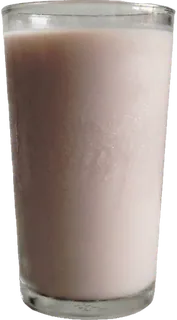
Chibé
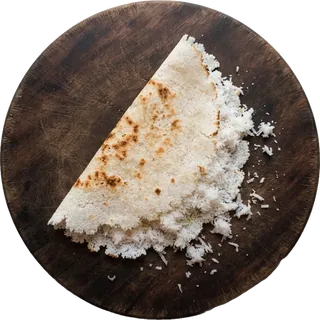
Coarse cassava flour, farinha d'água, stirred into cold river or well water until the grains swell, seasoned with salt and crushed chilli. Riverine households along the Amazon and its tributaries mix it fresh at the midday meal, when heat is highest and appetite for cooked food drops. The flour itself is sold loose by the kilo in river markets and corner stores, never pre-mixed.
How to order
Me vê um chibé bem gelado, com bastante pimenta, por favor?
The transaction runs in Portuguese, even in towns where Nheengatu loanwords like “chibé” itself survive in everyday speech. There is nothing to settle for the vegan question, since the flour, water, salt and chilli involved never touch meat or fish. What is worth specifying is “bem gelado” — well chilled — since vendors vary in how much ice or cold water they use, and “bastante pimenta” if more chilli is wanted.
History
Chibé takes its name from Nheengatu, the Tupi-based trade language still spoken by communities along the upper Rio Negro; in parts of Pará the same dish is called caribéu. Cassava is grown by smallholders on the várzea and terra firme around towns such as Santarém, Parintins and Manaus, then grated, pressed and roasted into farinha d'água in a casa de farinha. To make chibé, a cook spoons the dry flour into a gourd or bowl, pours in cold river or well water, and works in salt, crushed chilli and sometimes a squeeze of lime until the flour swells into a loose paste. It is mixed at the table at midday, when boiled food is set aside in the heat, and the dry flour itself is sold loose by the kilo in river markets and corner stores.
Everything in the bowl is plant: coarse cassava flour, water, salt and chilli, mixed cold with no cooking step at any point. There is no stage, in a casa de farinha or at the table, where lard, stock or dried shrimp customarily enters this particular dish, unlike the beans, tacacá or caruru often served alongside it. Dried fish or charque sometimes sits on the same plate as a side, but it is not stirred into the chibé itself, so nothing about the bowl needs settling at the counter.
Where to get it
River markets and roadside stalls in Manaus, Santarém and Parintins sell farinha d'água loose, and households mix chibé themselves through the dry season, roughly June to November, when the heat is sharpest; a bowl made to order at a market stall runs about R$ 5 to R$ 8.