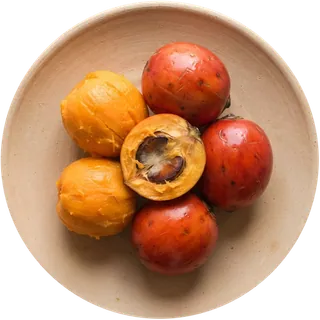
Doce de Cupuaçu
The sour white pulp of cupuaçu, a fruit related to cacao, is cooked down with sugar into a thick preserve. Growers and small processors in the Amazon basin reduce it in copper or aluminum pans until it sets, then pack it into glass jars. It is sold in markets and shops across Amazonas and Pará, spooned onto tapioca flour, bread, or eaten on its own.
How to order
Me vê um potinho de doce de cupuaçu, só o doce mesmo, sem creme, por favor.
The transaction runs in Portuguese in both Belém and Manaus markets. Asking for “só o doce, sem creme” settles it, since jars labelled doce sit on the same shelf as cupulate bars and cupuaçu creams that carry milk. Stalls selling several cupuaçu products under similar names can otherwise hand over the dairy version instead of the plain preserve.
History
Cupuaçu, kupu'asu in Tupi, names both the tree, Theobroma grandiflorum, and its fruit, grown across the Amazon basin of Amazonas and Pará, in agroforestry plots and backyard orchards as much as in commercial stands. The fruit is a woody pod holding a soft, strongly sour white pulp around the seeds; smallholders and riverine (ribeirinho) households crack the pods, pick the pulp free of seed and fiber, and cooks or small processors boil it down with sugar until it thickens into doce de cupuaçu, a sweet set firm enough to spoon. It is sold year-round, since the pulp freezes well, at municipal markets such as Ver-o-Peso in Belém and feiras in Manaus, and packed into jars for shelves further south.
The pot itself holds only fruit and sugar: cupuaçu pulp, water to thin the cooking syrup if needed, and sugar, boiled down until it sets, with no animal product entering at any stage. Animal product shows up only in two related products sold alongside the plain doce: cupulate, a cupuaçu-based chocolate substitute, and cupuaçu creams, both finished with milk or condensed milk. The jarred, spoonable doce de cupuaçu itself carries none of that, so the only thing to settle when buying is which product is in hand — the dark or pale doce, which is plain fruit and sugar, versus the cream or cupulate bar next to it on the same shelf, which is not.
Where to get it
Jars are sold year-round at municipal markets such as Ver-o-Peso in Belém and feiras near the Manaus waterfront, and at roadside stalls along Pará highways during the cupuaçu harvest from January to April, for roughly R$15 to R$30 per 300-400g jar.