Pupunha Cozida
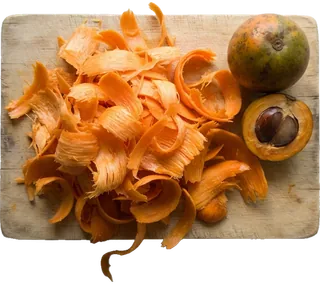
Pupunha is the fruit of the peach-palm, Bactris gasipaes, boiled whole in salted water for several hours until the starchy flesh softens, then peeled hot. Vendors and households across Amazonas, Pará and Acre sell it peeled or in the skin, eaten with coffee as a morning food.
How to order
Me vê umas pupunhas cozidas, sem manteiga, pode ser?
The only thing to settle is whether butter goes on the peeled fruit, and saying “sem manteiga” before the vendor reaches for it settles the matter, since nothing else enters the pot. The exchange runs in Portuguese at markets and street stalls throughout Amazonas, Pará and Acre.
History
Pupunha is a Tupi-derived name for the fruit of Bactris gasipaes, the peach-palm, grown in dooryard gardens and smallholdings across Amazonas, Pará and Acre. Indigenous peoples of the Amazon basin, among them the Baniwa and the Wajãpi, have cultivated the palm for generations for its fruit and its wood. Harvesters cut down bunches when the fruit turns orange to red, and cooks boil the whole fruit in salted water for two to four hours, since the raw flesh is harsh on the throat and will not soften on a quick boil. Vendors sell it hot, peeled or unpeeled, at markets such as Belém's Ver-o-Peso and Manaus's Mercado Adolpho Lisboa, and at street stalls in Rio Branco, usually in the morning alongside coffee.
The pot itself holds only the fruit, water and salt, all plant. Animal product enters, where it enters at all, after the boil: some vendors and households smear butter onto the peeled fruit before handing it over or setting it on the table. Nothing is mixed into the pot during cooking, so the question is simple to settle at the point of sale, unlike dishes where meat has already flavored a broth hours earlier. Asking for it without butter, before the vendor's hand reaches for it, is enough.
Where to get it
Markets such as Ver-o-Peso in Belém and the Mercado Adolpho Lisboa in Manaus, plus street vendors in Rio Branco, sell pupunha from around September through February, by the piece or by the kilo, for roughly R$1 to R$3 each or R$8 to R$15 a kilo.