Tucumã
Tucumã is the orange-fleshed fruit of a spined Amazonian palm, Astrocaryum aculeatum, boiled briefly to loosen its skin before the flesh is cut off the hard central stone in thick slices. Vendors at Manaus markets sell the slices loose in small plastic bags, eaten out of hand as a snack between meals.
How to order
Me vê um saquinho de tucumã bem maduro, por favor?
The sale runs entirely in Portuguese at the market stall. There is no animal product to ask about, since the fruit is sold exactly as it is cut from the stone, with nothing added. The only things worth specifying are quantity, as in “um saquinho”, a small bag, and ripeness, as in “bem maduro”, well ripe.
History
Tucumã is the Tupi-derived name, in Portuguese, for the fruit of Astrocaryum aculeatum, a spined palm native to the Amazon basin and grown across the state of Amazonas. The palm fruits in clusters high in its crown; ribeirinho (riverine) smallholders and Indigenous communities such as the Baniwa, who live along the Rio Negro and its tributaries, cut down the bunches and carry them to market towns and to Manaus. There the fruit is boiled for roughly an hour to soften the thin orange-red skin and firm the oily pulp, then cooled, peeled, and the flesh is sliced off the hard central stone. It is sold at the Mercado Municipal Adolpho Lisboa and at neighborhood feiras, mainly from September through February. The fruit is also called tucumã-açu, to distinguish it from the smaller tucumã-i.
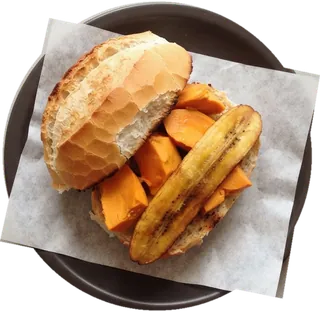
Everything in the bag is plant: the fruit itself, boiled in plain water and cut from its stone, nothing else added. No animal product enters at any stage, from the palm bunch to the sliced flesh sold at the stall, so there is nothing to settle when buying the fruit on its own. The one place tucumã does meet an animal product is elsewhere, in a different dish: the Manaus sandwich known as X-caboquinho, where sliced tucumã is layered with tapioca and queijo coalho, grated cheese melted inside a hot press. That sandwich is a separate order; the plain sliced fruit sold loose in bags carries none of it.
Where to get it
Sold at the Mercado Municipal Adolpho Lisboa and at neighborhood feiras across Manaus, Amazonas, in season from roughly September through February, for about R$5 to R$10 a bag.