Tucupi
Tucupi is the yellow liquid pressed from grated bitter cassava root, left to settle, then boiled for several hours until the natural cyanide compounds break down and the liquid turns safe to drink. Many cooks let it ferment briefly first, which gives it a sour edge. It is sold bottled by the litre in Amazonian markets, used as a cooking base rather than drunk on its own.
How to order
Me vê uma garrafa de tucupi puro, sem camarão, por favor.
Asking for tucupi “puro, sem camarão” separates the plain cassava liquid sold for home cooking from pots already seasoned with dried shrimp for tacacá, since the same stall often sells both. The exchange runs in Portuguese at any Amazonian market. For tacacá or maniçoba ordered ready to eat, the question to ask is “tem camarão?” or “tem carne de porco?”, since by the time either reaches the counter the shrimp or pork has already simmered into the broth and cannot be taken back out.
History
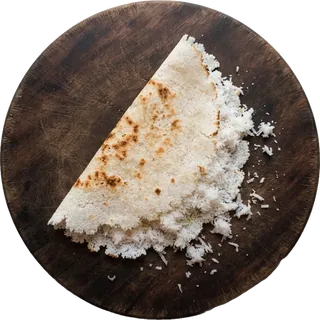
Tucupi is a Portuguese word carrying a Tupi root; cassava processing of this kind was practiced by Indigenous peoples of the Amazon basin — among them the Baniwa and the Wajãpi — long before Portuguese colonization, and the name passed into regional Portuguese together with the technique. In Pará, Amazonas and Amapá, smallholders and riverine (ribeirinho) households grow mandioca brava, bitter manioc, alongside sweet varieties. The root is peeled, grated and pressed — traditionally in a tipiti, a woven sleeve that squeezes out the liquid — and the yellow liquid is left to settle, then boiled for several hours to break down its cyanogenic compounds. Bottled tucupi is sold year-round at markets such as Ver-o-Peso in Belém and the municipal markets of Manaus and Macapá.
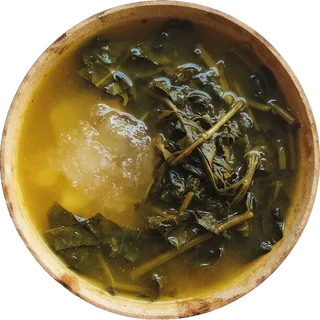
The liquid itself is entirely plant: cassava, water pressed out of the pulp, nothing animal added at any stage of settling, fermenting, or boiling. Animal product enters only once tucupi becomes the base of a cooked dish — pato no tucupi carries duck meat, maniçoba carries salted pork and smoked cuts simmered for days with manioc leaves, and tacacá, the soup most often sold by street vendors, carries dried shrimp (camarão seco) stirred into the broth before it is ladled out. Buying the bottle alone settles nothing to check, since nothing animal is in it. Ordering any of the three prepared dishes is different: the tacacá pot and the maniçoba pot are started hours, sometimes days, earlier with shrimp or pork already in them, so asking at the counter cannot remove what has already cooked in.
Where to get it
Markets across Belém, Manaus and Macapá — Ver-o-Peso among them — sell bottled tucupi year-round, a litre running roughly R$10 to R$20; tacacá stalls that use it as a soup base set up chiefly in the late afternoon and evening, a bowl running about R$8 to R$15.