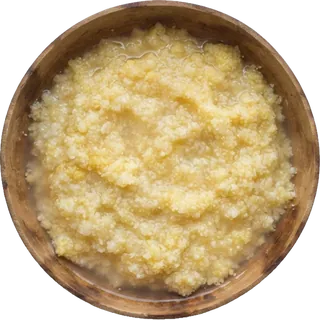
Farinha de Uarini
Cassava root grated, pressed to remove its liquid, fermented briefly, then toasted by hand over wood fire in a wide copper basin until it curls into flat, pale flakes. Produced in small flour houses along the Solimões River near Uarini, Amazonas, sold by the kilo in sacks at river ports and city markets.
How to order
Me vê um quilo de farinha de Uarini, bem fininha, por favor.
The sale runs entirely in Portuguese, and there is nothing to settle about what is in the flour, since it never touches animal product at any stage. The only real question at the counter is texture, whether it is “fina” (fine) or “grossa” (coarse), which is a matter of preference, not ingredients.
History
Farinha de Uarini is named for the municipality of Uarini, on the middle Solimões River in the state of Amazonas, upriver from Tefé. It is a type of farinha d'água (water-processed cassava flour), distinguished by flat, crisp flakes toasted pale rather than golden, a method specific to producers in the region, recognized since 2019 with a geographical indication from Brazil's patent office. Family farms and riverine producers (ribeirinhos) grow mandioca brava (bitter cassava) in the várzea and terra firme plots, peel and grate the roots, press out the liquid, let the pulp rest briefly, and toast it by hand over wood fire in broad copper or metal basins (tachos), stirring until it dries into flakes. It is sold in sacks by the kilo at the Uarini waterfront, in Tefé's market, and shipped downriver to Manaus's Mercado Adolpho Lisboa.
Cassava, water, and fire make up the entire process: the root is peeled, grated, pressed, briefly fermented, and toasted, with nothing else added at any stage. No milk, egg, meat, or stock enters the pot, and there is no finishing step at the table either, since farinha is eaten plain or stirred into other dishes rather than dressed itself. What varies is what farinha gets added to afterward — beans, broths, açaí, grilled meats — and that is a separate question from the flour itself, which carries nothing to settle at the point of sale.
Where to get it
Uarini's riverfront, Tefé's municipal market, and Manaus's Mercado Adolpho Lisboa sell it year-round by the kilo in sacks, with production heaviest in the dry season (June–November); roughly R$8–R$15 per kilo depending on distance from Uarini.