Jambu Refogado
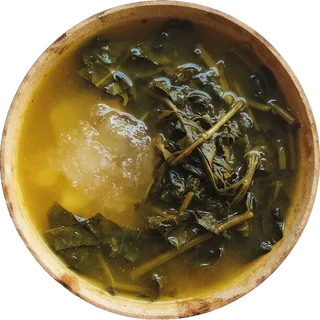
Jambu — the leaves and tender stems of Acmella oleracea — blanched briefly in boiling water, then fried in oil with garlic until wilted. The leaf carries a mild numbing, tingling effect on the tongue and lips, from a compound in the plant itself. Sold as a side vegetable in home kitchens and botecos across Belém and the Pará interior, alongside rice, beans and fish.
How to order
Me vê um jambu refogado sem manteiga, por favor?
The point to settle is whether the cook finishes the pan with butter, since garlic and oil alone leave the dish fully plant-based. Asking for it “sem manteiga,” without butter, before the pan goes on the heat covers it, as the transaction runs in Portuguese in both home kitchens and botecos. Once butter has already been melted into the finished dish, there is no undoing it, so the request needs to land before cooking starts.
History
Jambu is the Portuguese spelling of a Tupi name for Acmella oleracea, called erva-de-dor or agrião-do-pará in some parts of Pará. The plant grows in várzea gardens and small plots around Belém, Santarém and towns along the lower Amazon, tended by small growers who bring bundles of the leafy stems to markets such as Ver-o-Peso in Belém. Vendors sell it loose, by the bunch, since the leaves wilt within a day or two of cutting. To make jambu refogado, cooks blanch the stems and leaves briefly in boiling water, drain them, then fry the greens in oil with chopped garlic over high heat until wilted. It is eaten as a side dish at home and in botecos across Pará, and used as the defining ingredient in tacacá and pato no tucupi.
Everything in the pan is plant: water for the blanch, oil, garlic and the jambu itself, with salt added to taste. No animal product is needed at any stage, and most versions sold in markets and home kitchens contain none. The one variation to watch is a finishing knob of butter that some cooks melt into the pan at the end, after the garlic has already browned, to round out the dish before it is plated. Where that happens in a home kitchen or a small boteco, the butter goes in before the dish ever reaches the table, so there is nothing to adjust once a plate is served; the only point at which to settle it is before cooking begins, by asking the cook directly.
Where to get it
Home kitchens, botecos and market kitchens around Belém, Santarém and towns of the Pará interior serve it as a side dish year-round, typically for R$ 8 to R$ 15 a portion alongside rice, beans or fish.