Açaí com Farinha
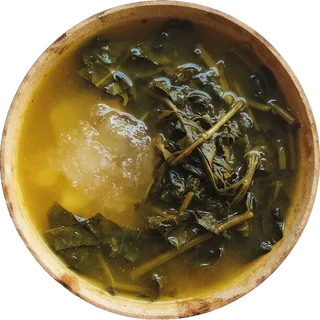
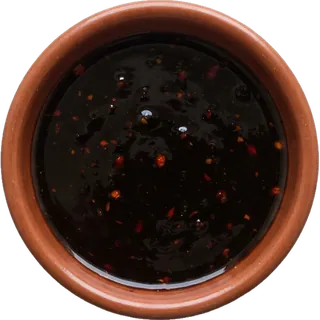
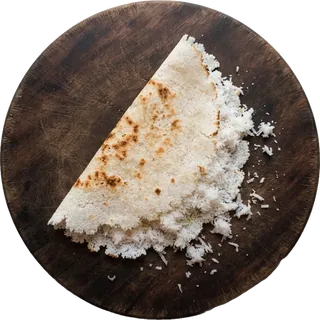
Thick, unsweetened açaí pulp, the colour of dark wine, eaten with coarse cassava flour stirred in by the spoonful until it thickens further. Belém households and lunch counters serve it as a savoury course rather than a dessert, usually with fried fish or dried shrimp set on the side of the same plate.
How to order
Me vê um açaí com farinha, sem peixe e sem camarão, por favor.
The sale runs in Portuguese at the counter or market stall, and the one thing worth confirming is whether the fish or shrimp comes already on the plate. Saying “só o açaí com farinha” or “sem peixe” settles it before the bowl is assembled; asking after it is plated usually just means picking the portion off yourself.
History
Açaí is a Tupi word, from wasa'i, naming the fruit of Euterpe oleracea, a palm that grows along the várzea floodplains around Belém and the mouth of the Amazon. Riverside families harvest the clustered berries by climbing the palms or cutting bunches with a pole knife, then soak and work the fruit through hand presses or small motorized mills at riverside stops and at Belém's Ver-o-Peso market, yielding a thick, near-black pulp. Sold by the litre from barrels and coolers each morning, it is kept cold and eaten the same day, at home or at counters called casas de açaí, as the base of the midday meal rather than as a sweet.
The pulp and the farinha stirred into it are both plant: açaí fruit, water used in pressing, and roasted cassava flour, no dairy, egg or stock involved in making either. Animal product enters beside the bowl, not inside it — a portion of fried fish or dried shrimp set on the same plate as the other half of the meal, added by the cook at the counter, not stirred into the açaí itself. What has to be settled at the point of order is whether that fish or shrimp portion comes on the plate at all, since many counters plate it as a single combination by default.
Where to get it
Belém, especially around Ver-o-Peso market and the casas de açaí scattered through the city, serve it at lunch year-round, with the fruit itself in heaviest harvest from August to December; a bowl with farinha runs about R$10 to R$20 depending on whether fish or shrimp is included.