Wojapi
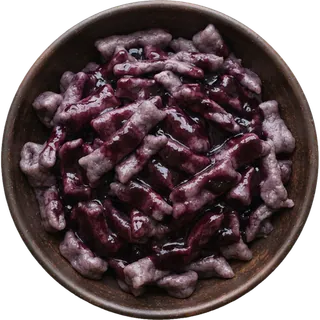
Chokecherries or buffalo berries simmer down with water into a thick, dark-red sauce, tart and slightly sweet, eaten on Pine Ridge and other Lakota communities across South Dakota as a topping for fry bread or a side at meals.
How to order
Could I get some wojapi with my fry bread, please?
The sauce itself is reliably plant-based, so the question to ask is about the bread it's served on: ‘is the fry bread made with lard or oil?’
History
Wojapi is made by Lakota families on the Pine Ridge Reservation and other Oceti Sakowin communities in South Dakota, where chokecherries and buffalo berries are gathered in late summer along creek bottoms and fence lines. The fruit is pitted or strained and cooked down slowly with water until it thickens into a dark sauce, a method that predates contact and continued through the reservation era when commodity flour and sugar became more available. It is served at wacipis, church gatherings and family meals, most often spooned over fry bread, and recipes are passed between households rather than measured out in writing.
The old version is nothing but berries and water, cooked down over heat until the juice thickens on its own; no animal product enters at any stage. Sugar and cornstarch appear in many kitchens today to sweeten the fruit or speed the thickening, and some cooks add store-bought pie filling as a shortcut, but neither of those changes the plant-based base. What a diner actually has to settle is whether the fry bread served alongside it was made with lard or with a vegetable-oil dough, since the bread, not the wojapi, is where animal fat usually enters.
Where to get it
Look for it at powwows and wacipis, tribal fairs, and Native-owned stands and kitchens on and around the Pine Ridge Reservation, especially in late summer and early fall when chokecherries are harvested.