Yaksik
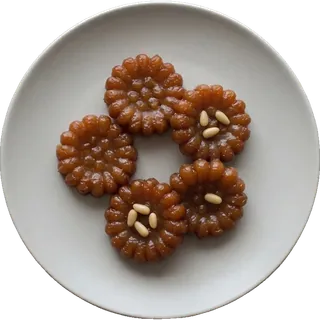
Glutinous rice is steeped, steamed, then mixed with honey, soy sauce, sesame oil, jujube, chestnut and pine nut before a second steaming turns it dark and sticky; the block is pressed flat and cut into squares. It is eaten on Jeongwol Daeboreum, the first full moon of the lunar year, in Gyeongju and beyond.
How to order
혹시 꿀 대신 조청 넣은 약식 있어요?
Honey is usually folded into the rice during the first steaming, long before the block is pressed and cut, so it can't be removed once it's made; ask before buying, not after, with “혹시 꿀 대신 조청 넣은 약식 있어요?” Stalls that cook their own syrup rather than buying a pre-mixed honey base are the ones likeliest to have a jocheong version on hand.
History
The dish's origin is traced to Silla-era Gyeongju: the Samguk Yusa records that King Soji, in the fifth century, was warned of a plot against his life by a crow, and decreed that crows be honored every year on the fifteenth day of the first lunar month with an offering of sweetened glutinous rice. That offering became yaksik (약식), still cooked and eaten on Jeongwol Daeboreum alongside ogokbap and dried greens. Rice is soaked overnight, steamed, folded with honey, soy sauce, sesame oil, chopped jujube, chestnut and pine nut, then steamed again until the grains darken and turn sticky, pressed flat and cut into squares.
Yaksik carries none of the three usual points where animal product enters Korean cooking: there is no jeotgal in a kimchi paste, no myeolchi-yuksu beneath it, no egg garnish on top. The one animal ingredient is honey, folded into the rice during the first steaming, long before the block is pressed and cut, so it cannot be lifted out afterward. Jocheong, a grain syrup, produces the same dark colour and sweetness and already stands in for honey in some kitchens; what has to be settled is which syrup went into the pot, not what sits on the finished piece.
Where to get it
Tteok shops and market stalls in Gyeongju, around Hwangnam-dong and Cheomseongdae, and tteok counters nationwide in the week of Jeongwol Daeboreum, usually mid-February; a small block runs KRW 3,000-5,000, boxed gift sets more.