Arroz de Cuxá
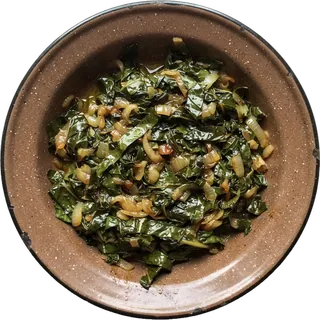
White rice plated beside cuxá, a dark, sour-tasting paste made from stewed vinagreira leaves ground with toasted sesame and cassava flour. The paste simmers for hours until it turns nearly black, then is spooned over or beside the rice. Sold at lunch counters and market stalls across São Luís, Maranhão.
How to order
Esse cuxá já leva camarão seco ou dá pra fazer sem, por favor?
The transaction runs in Portuguese. Since the shrimp is ground into the paste hours before service, asking “sem camarão” at the counter only works if the kitchen keeps a separate pot made that way from the start; a pot already on the stove cannot be unmade. At market stalls and small kitchens in São Luís, it is worth asking “tem cuxá sem camarão seco?” before ordering rather than after the plate arrives.
History
Cuxá takes its name from a word carried to Maranhão by West African peoples who were enslaved and brought to the region, along with the vinagreira plant itself, Hibiscus sabdariffa, called the sour leaf locally. In São Luís, cooks and market vendors pick the young leaves, boil and pound them, then grind in toasted sesame seed and cassava flour, simmering the mixture down over low heat until it darkens and thickens into a paste that keeps for days. Lunch counters, stalls at the Mercado do Vinhais, and household kitchens across the city serve arroz de cuxá at midday, the paste ladled over or beside plain white rice.
The rice, vinagreira leaves, sesame and cassava flour are all plant. Dried shrimp (camarão seco) are pounded and stirred into the cuxá paste early, during the hours it simmers down, not sprinkled on afterward. Because the shrimp are worked into the paste itself rather than added at the table, a pot already finished in a restaurant kitchen cannot be changed on request; what has to be settled is whether the paste was made without shrimp from the start, which means asking before the pot goes on, or finding a stall or kitchen that prepares a version of cuxá without camarão seco from the outset.
Where to get it
Market stalls, lunch counters and household kitchens in São Luís, Maranhão, serve arroz de cuxá year-round, most heavily during the June São João season, for roughly R$15 to R$30 a plate.