Chaqqa
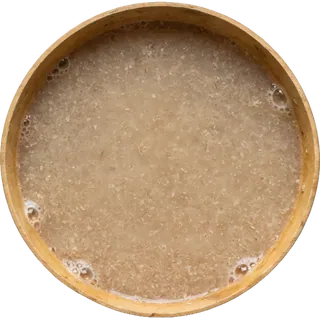
Sorghum grain, ground and left to ferment for several days in a large dried gourd, thickens into a sour, faintly alcoholic drink that doubles as a meal. Konso households prepare it at home and carry it to the fields, drinking it through the working day rather than at a single sitting. It is sold at local markets by the cup or by the gourdful.
How to order
እባክዎ አንድ ጫቃ ይስጡኝ፣ ደም የሌለበት፣ አመሰግናለሁ።
The only thing worth settling is which gourd is on offer, since stalls in some markets keep chaqqa next to a separate sorghum beer mixed with fresh blood, and the two are not easy to tell apart by sight. Asking for the one “ደም የሌለበት” — without blood in it — identifies plain chaqqa, though a seller who stocks only chaqqa will have nothing to clarify. The sale runs in Amharic in Karat's market and often in the Konso language in smaller village markets; either gets the order across. Nothing else needs settling, since chaqqa itself carries no animal product at any stage of its fermentation.
History
Chaqqa is the Konso name for a thick sorghum beverage made in Konso, in southern Ethiopia, an area known for the stone terraces its farmers maintain on steep, dry hillsides. Sorghum grown on those terraces is dried, then ground on a stone or in a hand mill. Women in Konso households manage the grinding and the fermentation, steeping the ground grain in water inside a large dried gourd and leaving it to sour for several days before it is ready to drink. It is prepared at home for daily use and sold by the cup or gourdful in the market at Karat and in smaller village markets on their market days.
Chaqqa itself is entirely plant: sorghum grain, water and the wild yeasts and lactic bacteria that colonize the gourd over several days of fermentation. Nothing animal enters the pot or the gourd at any stage of this preparation. In some Konso markets a different sorghum beer is sold alongside it with fresh animal blood stirred in at the point of preparation; that drink carries its own name and is kept apart from chaqqa rather than treated as a variant of it. The only thing to settle when buying is which gourd is actually on offer, since the two drinks are sold side by side and look alike before tasting.
Where to get it
Karat, the market town of the Konso zone, and smaller village markets across the terraced highlands sell it year-round by the cup or gourdful, for roughly 10 to 20 ETB a cup, more for a full gourd.