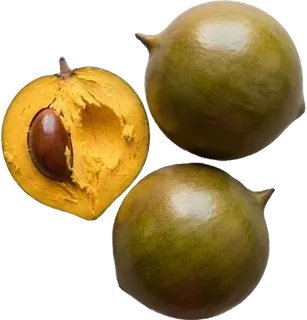
Chirimoya
A green, scaled fruit with white custard flesh and black seeds, grown in the irrigated valleys around La Serena and Quillota and picked ripe from autumn into winter. It is eaten straight from the half shell with a spoon, or beaten into juice with orange and sold at feria stalls across central Chile.
How to order
Una chirimoya alegre, sin crema, por favor.
Most feria stalls sell the fruit plain, with no cream involved at any stage; only some cafés in Quillota and La Serena add a spoonful on top, so ask for it “sin crema” to keep it plant-only: “Una chirimoya alegre, sin crema, por favor.”
History
Chirimoya takes its name from Quechua chiri muyu, cold seed, for a fruit that thrives in the cool, dry air of high Andean valleys. The tree spread south from Peru and Ecuador under Spanish colonial agriculture and took hold in Chile's irrigated Coquimbo valleys, around La Serena, Ovalle and the Limarí and Elqui rivers, and later in the Valparaíso region around Quillota and La Cruz, which holds an annual chirimoya festival each April. Growers pick the fruit still firm in autumn, let it ripen off the tree for a few days, then sell it by the kilo at ferias through winter.
The fruit itself is plant throughout: white flesh, black seeds, no animal product at any stage. Chirimoya alegre, the fruit halved and doused with fresh orange juice, is also entirely plant-based. The only point where dairy enters is at some cafés in Quillota and La Serena, where a spoonful of whipped cream is added to the bowl before it is served; home cooks and feria vendors sell the fruit alone, so the question is really whether cream has gone onto the plate, not into the fruit.
Where to get it
Feria stalls and fruit stands in La Serena, Ovalle and Quillota, and cafés in La Cruz during the April chirimoya festival; sold by the kilo from April to August, with a kilo running CLP 2,000-3,500 at a feria and a served portion around CLP 1,500-2,500 in a café.