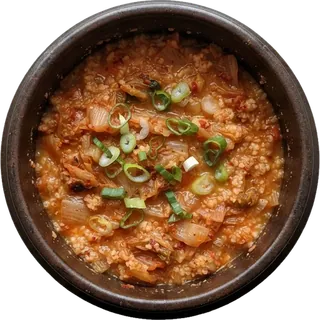
Dubu-jorim
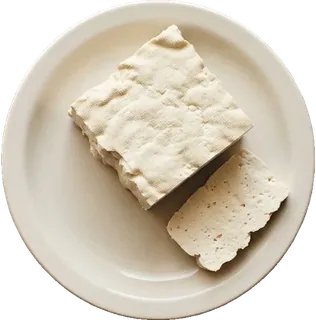
Firm tofu is sliced into slabs, pan-fried until a light skin forms, then simmered in a sauce of soy sauce, gochugaru and scallion until it thickens and clings to the tofu. It is a standing side dish on home tables across Seoul, served with rice at both lunch and dinner.
How to order
두부조림 멸치 육수 빼고 해주세요.
Dubu-jorim is usually braised in plain water, so in many home kitchens nothing needs changing. Ask at restaurants and lunch counters where the braise may be built on anchovy stock, with “두부조림 멸치 육수 빼고 해주세요”; since the stock goes in before the tofu, a kitchen already mid-braise may not be able to swap it, so ask when ordering rather than after it arrives.
History
Dubu-jorim (두부조림) is a banchan found on home tables throughout Seoul and the wider Gyeonggi region, made year-round rather than tied to one season. Firm tofu is cut into slabs about a centimeter thick, fried in a little oil until the surface tightens into a light skin, then laid into a shallow pan with a sauce of soy sauce, gochugaru, garlic, scallion and a little sugar, simmered until the liquid reduces and clings to the tofu. It is cooked in ordinary household quantities for a single meal, alongside rice and soup, rather than prepared in bulk for holidays like kimjang or Chuseok.
The base ingredients are plant throughout: tofu, soy sauce, gochugaru, garlic, scallion and sesame oil. The variable is the braising liquid — some home cooks and restaurant kitchens build it on myeolchi-yuksu (멸치육수), a stock of dried anchovy and kelp, in place of plain water or kelp-only dashi, added at the start of cooking rather than at the table. Once the tofu has simmered in that stock the anchovy cannot be separated back out, so the liquid used is the detail to settle before the pan goes on, not after it is served.
Where to get it
Home-style restaurants (백반집) and banchan counters across Seoul, from Jongno to Mapo, served as a side dish with set meals at lunch and dinner; a set meal including it runs about 7,000-10,000 won.