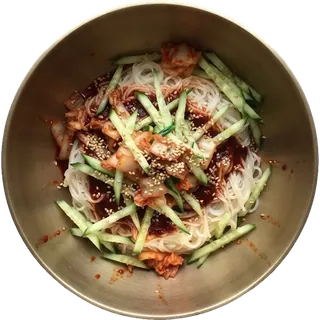
Dubu
Soybeans are soaked overnight, ground, boiled and strained, then set with brine and pressed in a cloth-lined wooden box until firm. Neighbourhood tofu shops in Seoul and Chungcheongnam-do sell it still warm each morning, eaten with nothing more than soy sauce.
How to order
두부에 김치 빼고 간장만 주세요.
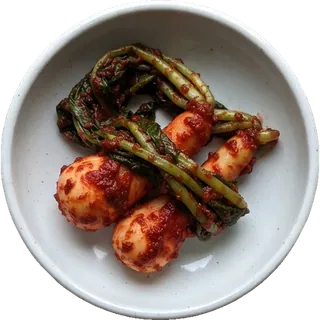
Dubu itself involves no animal product, but it is nearly always set down with a side of kimchi, and most kimchi paste contains jeotgal or fish sauce worked in long before serving. Ask for it left off with “김치는 빼 주세요,” since the paste cannot be picked apart once it's made.
History
Dubu (두부) has been made on the Korean peninsula since at least the Goryeo period, when Buddhist monasteries worked soybeans into curd for a vegetarian temple diet. Soaked soybeans are ground, boiled, strained through cloth, and the soy milk is set with brine, then pressed into a cotton-lined wooden box. Small dubu shops across Seoul and the villages of Chungcheongnam-do press it fresh before dawn and sell it still warm. It appears on jesa memorial tables and in temple meals, and in the custom of eating a plain block of tofu on the day someone is released from prison, as a mark of starting over clean.
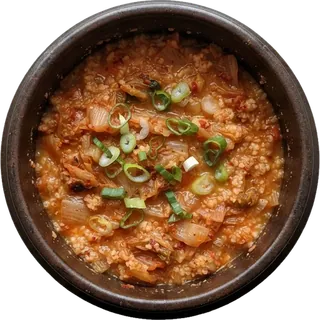
The tofu itself is soybean, water and a coagulant — usually nigari or food-grade gypsum — and no animal product enters its making. The question comes from what sits beside it: a plate of warm dubu is often served with a side of kimchi, and the kimchi's paste typically contains jeotgal, salted shrimp or fish sauce, worked in before fermentation and impossible to pick out afterward. Dubu also turns up simmered in sundubu-jjigae or other soups built on myeolchi-yuksu, dried anchovy and kelp stock, started before any other ingredient goes in. Eaten plain with only soy sauce, as it is from a morning tofu shop, dubu needs no adjustment.
Where to get it
Small dubu-jip tucked into residential alleys and traditional markets across Seoul, and tofu makers in the farming villages of Chungcheongnam-do, press and sell fresh blocks each morning, usually sold out by midday; a block runs about 2,000-3,500 won.