Farinha de Cruzeiro do Sul
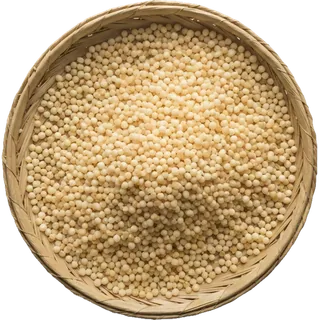
Farinha de Cruzeiro do Sul is coarse, deep-yellow cassava flour, grated and pressed to remove the root's liquid, then toasted slowly over a wood fire until the grains turn dark and crisp. Family houses along the Juruá river in Acre make it in large metal pans called fornos, and sell it loose by the kilo at town markets and roadside stands.
How to order
Me vê um quilo dessa farinha bem torradinha, por favor?
The flour itself needs nothing settled, since it is grated cassava and fire with nothing added at the counter. The phrase only specifies how dark the toast should be, “bem torradinha,” since houses vary from a light gold batch to one toasted nearly black. The sale runs in Portuguese at Acre markets, whether the stall is run by a ribeirinho household or by a Huni Kuin or Kulina family.
History
Farinha de Cruzeiro do Sul takes its name from the municipality of Cruzeiro do Sul, in the upper Juruá valley of western Acre; farinha is Portuguese for flour. Cassava (mandioca) grows along the Juruá's floodplains, tended by ribeirinho households and by Huni Kuin and Kulina (Madijá) communities, whose tipiti press and slow-toasting method the family houses still use. Roots are peeled, grated, pressed in the tipiti to remove the liquid, sieved, then stirred by hand for hours in a wide steel forno over a wood fire until the grain turns deep yellow-brown and hard. It is sold loose, by the kilo, at the Mercado Municipal of Cruzeiro do Sul and at riverside feiras along the Juruá.
Everything in the flour is plant: cassava root, water used in pressing, and the heat of the fire. No animal fat, broth or stock cube goes into the toasting pan, and the finished flour needs nothing settled when bought loose at a market stall. What does need asking is what the flour is turned into afterward: farofa made from it at a lunch counter or home kitchen sometimes has butter, bacon bits or a spoon of chicken-stock seasoning stirred in once the pan is off the fire, so a request for “farofa simples, sem manteiga e sem tempero pronto” applies to that dish, not to the dry flour itself, which leaves the family house already finished and already vegan.
Where to get it
Sold year-round by the kilo at the Mercado Municipal in Cruzeiro do Sul and at riverside feiras along the Juruá, in Acre, for roughly R$8 to R$15 per kilo depending on how dark and how coarse the toast.