Gahat ke Dubke
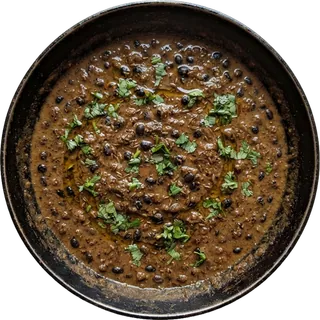
Gahat ke dubke is a thick, dark gravy made in the Kumaon hills of Uttarakhand by soaking horse gram overnight, grinding it to a paste, and simmering it slowly in mustard oil with ginger, garlic and local spices until it thickens into a dense, earthy stew eaten with rice or madua roti.
How to order
एक प्लेट गहत के डुबके दीजिए।
At a dhaba or home-style mess in Almora, it is worth asking ‘क्या इसमें घी डाला है?’ before ordering, since some kitchens finish the dish with a spoon of ghee for richness.
History
In the Kumaon region of Uttarakhand, particularly around Almora, households have long prepared gahat ke dubke from horse gram (gahat or kulath), a hardy pulse grown on terraced hillsides where rice and wheat are harder to cultivate. The pulse is soaked overnight, then ground wet on a stone slab into a coarse paste before being cooked slowly over low heat, traditionally in an iron pan, until it darkens and thickens. The dish is documented as a staple of Kumaoni hill kitchens, eaten with rice, madua (finger millet) roti or bhaat, especially in the colder months when horse gram's warming, protein-dense character is valued by mountain households.
The standard version of gahat ke dubke contains no animal ingredient: the base is horse gram cooked in mustard oil with ginger, garlic, turmeric and chilli, and no ghee, milk or curd is required by the recipe itself. In practice, a diner should still check three things: whether a spoon of ghee has been stirred in at the end for richness, whether a side of curd or buttermilk is served alongside it, and whether the same iron pan used for a fish or meat preparation earlier that day is being reused without washing, since Kumaoni households sometimes serve gahat alongside non-vegetarian dishes at the same meal.
Where to get it
Gahat ke dubke is found at Kumaoni home-style messes and small dhabas in and around Almora, and at hill-town eateries serving Uttarakhandi thali, most often in winter when horse gram is in season.