Linthmais
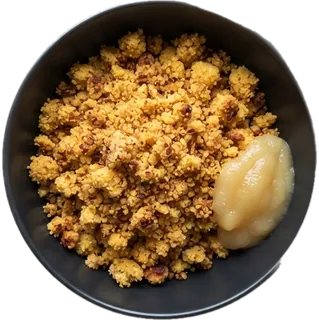
Coarse-ground maize from the reclaimed Linth plain, boiled slowly and turned out onto a board, eaten plain with soup or finished with butter or cheese at the table.
How to order
Einen Linthmais ohne Butter und Käse, bitte.
Ask whether the polenta is finished with butter or cheese before it leaves the kitchen, since both are commonly stirred in off the stove rather than cooked into the grain. Saying ‘ohne Butter und Käse, bitte’ is enough to have it served plain.
History
Linthmais takes its name from the Linth plain, the marshland between Lake Walenstadt and Lake Zurich that engineers under Hans Conrad Escher drained between 1807 and 1823, turning flood-prone ground into fields that could carry maize. Farmers in Glarus, Schwyz and St. Gallen grew the new crop through the nineteenth century, milled it coarse at local water mills, and boiled it in copper kettles over open hearths as a daily grain dish for field and dairy workers. It was eaten at midday, often twice a day in poorer households, and the leftover polenta was sliced and fried the next morning.
The dish itself is maize, water and salt, cooked until it pulls from the sides of the kettle; nothing animal enters the pot during cooking. Butter or a hard alpine cheese such as Sbrinz or a local Bergkäse is stirred in or grated over the top once it is served, and this is where the dish stops being plant-only. Ordered or bought without that addition, Linthmais is the same grain preparation farmers in the Linth valley ate on its own. A diner only needs to confirm that no butter, cream or cheese has been worked in before serving.
Where to get it
Village bakeries and farm stalls in Glarus, Schwyz and St. Gallen sell it fresh in autumn after the maize harvest, and some alpine restaurants keep it on the menu year-round as a side.