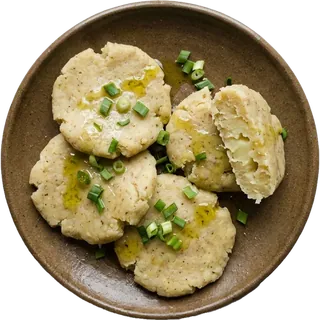
Milcao
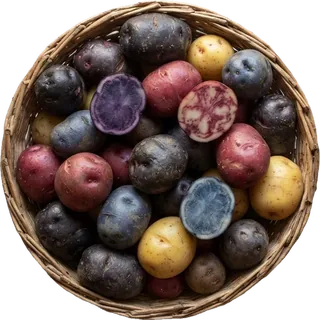
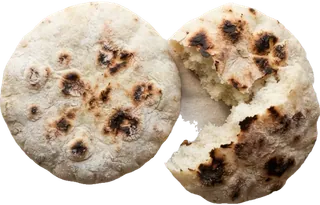
Raw potato is grated and squeezed dry, then mixed with cooked mashed potato into a dense dough, shaped into flat cakes and fried, baked or buried among hot stones in a curanto pit. Chilotes eat it year-round, from home kitchens in Castro to the markets of Dalcahue and Quemchi.
How to order
¿Me puede dar un milcao sin chicharrones, por favor?
Chicharrones and lard are kneaded into the dough before it is shaped, so the only way to get a plain version is to ask before it goes on to fry, bake or into the curanto pit, at a stall or kitchen counter that runs in Chilean Spanish: “¿Me puede dar un milcao sin chicharrones, por favor?” A few stalls in Castro and Dalcahue keep a potato-only batch, but most don't, since the pork is standard.
History
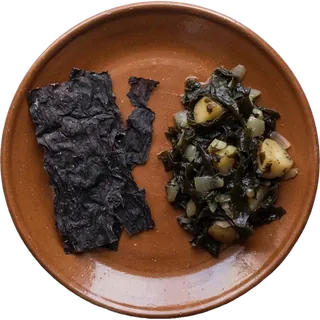
Milcao is the Chilean Spanish name for this potato cake, made across the Chiloé archipelago in the Los Lagos region, from Huilliche family kitchens to the markets of Castro and Dalcahue. Potatoes have grown on these islands since before Spanish ships arrived in 1567, and Chiloé remained Spain's last foothold in the Americas until 1826. Raw potato is grated, wrung dry through a cloth, and kneaded with cooked mashed potato into flat cakes, fried, baked, or buried in a curanto, the communal pit of heated stones and nalca leaves. It is cooked for family meals and for mingas, the work parties that still gather neighbors at harvest.
The base is potato only: raw grated potato wrung dry and cooked mashed potato, kneaded into one dough. Animal product enters at that same mixing stage, not afterward — chicharrones, small pieces of pork rind fried until crisp, and lard are worked directly into the dough in nearly every traditional version, which means once the cakes are shaped there is no removing them. A plain potato milcao exists in some home kitchens and at a few stalls, but it has to be asked for before the dough goes together, since the pork is mixed in well before frying, baking or burying it in the curanto pit.
Where to get it
Market stalls and casual eateries in Castro and Dalcahue, on Chiloé island in the Los Lagos region, sold year-round but most often alongside curanto at weekend and summer gatherings; a milcao costs CLP 500-1,000 at a market stall, more as part of a full curanto plate.