Orieh
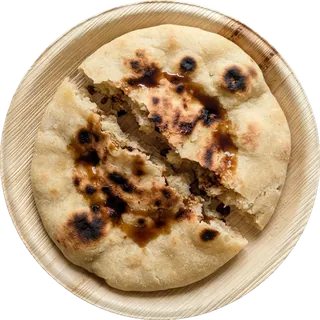
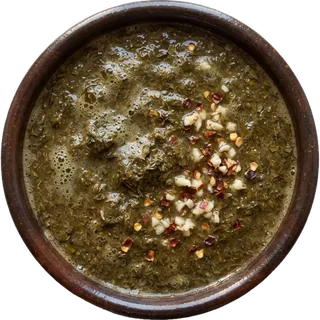
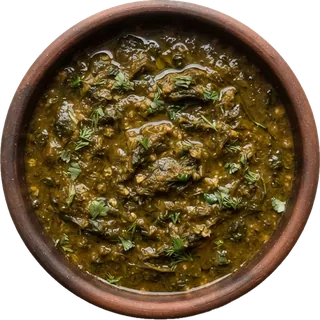
Orieh is a green paste made by rubbing fresh pea leaves into a fine mash, eaten with kabid bread in Nubian households around Aswan. The taste is earthy and slightly bitter, cut with fried garlic stirred through at the end.
How to order
ممكن الأوريه بزيت مش سمنة، لو سمحت؟
Ask whether the garlic in the orieh was fried in oil or in samna before ordering, and if samna was used, request the plant-based version by saying ‘بزيت مش سمنة’.
History
Orieh is documented among Nubian communities in Aswan, particularly in villages resettled after the Aswan High Dam reservoir flooded the old Nubian lands in the 1960s. Pea leaves are picked young, washed, and rubbed by hand against a flat surface until they break down into a smooth green mash. The dish is served alongside kabid, a flatbread made from sorghum or wheat, torn and used to scoop the paste. It appears as a side dish at family meals rather than a special-occasion food, and recipes vary slightly from household to household in how finely the leaves are worked and how much garlic is added.
The pea leaves themselves contain no animal product. The point of entry is the garlic fried into the mash just before serving: some households use vegetable oil, others use samna, clarified butter, for its flavor. Because the standard preparation is not fixed on one fat, the dish is labeled vegan on request rather than naturally vegan. A diner who wants a plant-based version asks for the garlic to be fried in oil rather than samna; most households can do this without changing the rest of the recipe, since the leaves and garlic are the only two ingredients in play.
Where to get it
Orieh is cooked at home in Nubian households in Aswan and in the resettlement villages nearby; it appears on the table at family-run eateries that serve Nubian food rather than at general market stalls.