Pajeon
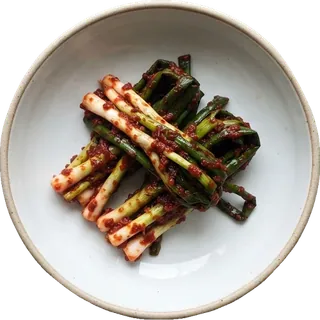
Whole scallions are laid flat in a thin flour batter and fried until the edges crisp; in Dongnae, now part of Busan, the batter is thickened with glutinous rice and briefly steamed at the end. It is eaten as anju with makgeolli across Busan and South Gyeongsang Province.
How to order
파전에 계란이랑 해물 빼고 주세요.
Squid, oyster and egg are mixed straight into the batter before it goes into the pan, so asking afterward does no good — the request has to land before cooking starts: “파전에 계란이랑 해물 빼고 주세요.” Many restaurants also carry 야채파전 (vegetable pajeon) as a separate menu item, which sidesteps the question entirely.
History
Pajeon (파전) is fried in home kitchens and street stalls across Korea, a thin batter of flour and water poured into an oiled pan with whole scallions laid flat, fried crisp at the edges. It is everyday anju, eaten with makgeolli, craved on rainy days, when frying oil is likened to the sound of rain. Wheat flour became common only after U.S. aid followed the Korean War, and pajeon spread as cheap, fast food in the lean years after. Dongnae, in Busan, makes it thicker, bound with glutinous rice flour, loaded with seafood, and steamed at the end — old enough to carry its own name, Dongnae pajeon.
Pajeon's base is scallion, flour and water, plant throughout. Most restaurant and street-cart versions add squid and oyster rings straight into the batter, and bind the whole thing with egg, sometimes pouring a second egg over the top midway through frying. None of the paste-based hiding places common elsewhere in Korean cooking — jeotgal in kimchi, anchovy-kelp stock under soup — apply to pajeon; the only insertion is egg and seafood, both mixed into the batter before it hits the pan, which means a plant-based order has to be settled before cooking starts, not after.
Where to get it
Street-side pojangmacha and makgeolli bars across Busan and South Gyeongsang Province serve plain pajeon as evening anju, 8,000-12,000 won a plate; in Busan's Dongnae district, restaurants built around the dish serve Dongnae pajeon to order, a larger portion meant for sharing, for 20,000-30,000 won.