Miyeok
Dried sea mustard is soaked back to green, then simmered in sesame oil with garlic until the broth turns dark and silky. Korean women eat the soup for weeks after childbirth, and by tradition everyone eats a bowl again on every birthday that follows.
How to order
고기나 멸치육수 안 들어간 미역국 있어요?
Most restaurant kitchens start the broth with beef or dried anchovy well before the lunch rush, so asking “고기나 멸치육수 안 들어간 미역국 있어요?” at the counter often just gets a no, since there is no plain pot left to serve from. Temple restaurants and Buddhist-run cafes keep a separate kelp-and-mushroom pot and will serve it if you ask for 사찰식 미역국 by name.
History
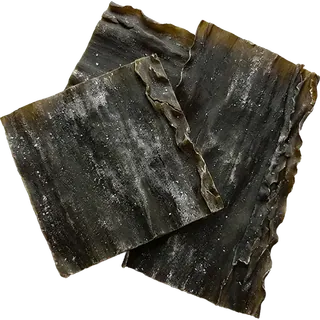
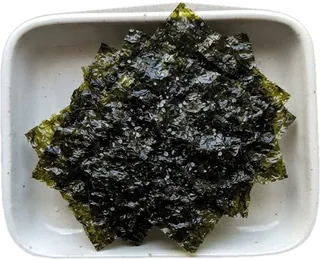
Miyeok (미역), sea mustard, is harvested along Korea's southern and Jeju coasts, cut by haenyeo divers from spring through early summer, then dried in black ribbons on racks by the shore. Soaked back to green and simmered slowly with sesame oil, garlic and soy sauce, it becomes miyeok-guk, the soup set before a woman after childbirth, believed to restore the iron and calcium she lost, and poured again for her children and grandchildren on every birthday after, marking the day their mothers first ate it. The custom is said to come from fishermen who watched whales graze on seaweed after calving.
Soy sauce and sesame oil form the plant base, and jeotgal does not enter into it, since miyeok-guk is not a kimchi dish. The broth is the issue: home and restaurant versions are usually built on beef brisket, seared first with the seaweed before water is added, or on myeolchi-yuksu, dried anchovy and kelp stock, poured in before the seaweed simmers. Temple kitchens make a version with the same seaweed and sesame oil but build the broth on kelp and mushroom alone, and that is the version to ask for by name, since the meat or anchovy stock cannot be lifted back out once it has simmered into the pot.
Where to get it
Dried miyeok is sold year-round at every market stall and grocery in Korea, cheapest on Jeju Island near the haenyeo diving villages, a bundle running 3,000-5,000 won. The soup itself is mostly a home dish, though temple restaurants in Seoul's Insadong and in Jeju's coastal towns serve the kelp-and-mushroom version at lunch for 10,000-15,000 won.