Gat-kimchi
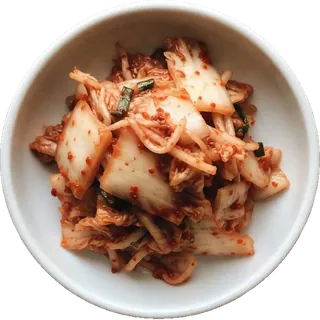
Whole mustard leaves are salted, packed with chilli paste, garlic and ginger, then left to ferment for weeks, longer than cabbage kimchi, until the leaf turns deep purple-green and sharp. It is the kimchi associated with Dolsan, a peninsula at Yeosu in South Jeolla, sold year-round at the town's market stalls.
How to order
젓갈 안 들어간 갓김치 있어요?
Gat-kimchi is usually bought already fermented rather than made to order, so the paste's seasoning is fixed well before it reaches the jar; ask the vendor directly with “젓갈 안 들어간 갓김치 있어요?” and expect that most stalls carry only the standard, anchovy-seasoned batch, since a jeotgal-free version is a separate small batch rather than something made on request.
History
Gat-kimchi (갓김치) is made on the Dolsan peninsula, joined to Yeosu by a bridge, in South Jeolla province, where the sea air is said to keep the mustard plant's bite milder than the same leaf grown inland. Farming families there have grown gat on the peninsula's terraced fields for generations, salting the whole leaves each autumn at kimjang time and packing them with chilli paste to ferment through winter. The kimchi travels well and keeps for months, so it is shipped out of Yeosu to tables across the country as a named regional good rather than eaten only at home.
The base is plant throughout: mustard leaves, chilli powder, garlic, ginger and salt. Jeolla cooks season the paste more heavily than other regions, and anchovy sauce (myeolchi-aekjeot) or salted shrimp (saeu-jeotgal) is standard in home and market recipes, stirred in with the chilli paste before the leaves are packed to ferment. Once the leaves are salted and sealed in the paste, the fish sauce cannot be removed afterward, so the question has to be settled before fermentation starts, not at the table; a version made without it exists but is less common outside households that keep it that way deliberately.
Where to get it
Market stalls and roadside shops in Dolsan-eup on the Yeosu side of the strait, clustered near the Dolsan bridge market, where a jar runs roughly 8,000-15,000 won depending on size; stock is freshest just after the autumn kimjang season but sold year-round.