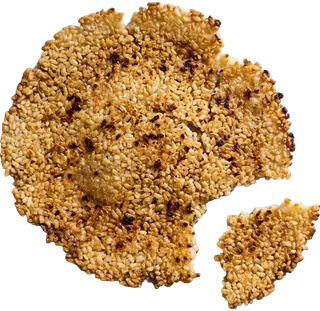
Songpyeon
Half-moon rice cakes are pinched shut around sesame, chestnut or sweetened bean, then steamed on a bed of pine needles that scents them as they cook. Families in Seoul and Incheon make them together on the evening before Chuseok, the autumn harvest holiday.
How to order
송편에 꿀 들어갔어요?
Sesame-filled songpyeon is usually mixed with honey for shine before it is sealed and steamed, so a finished batch cannot have it removed afterward. Ask before buying with “송편에 꿀 들어갔어요?”, and if the answer is yes, choose a chestnut or bean-filled one instead, which tteok shops more often sweeten with sugar alone.
History
Songpyeon (송편) is made the evening before Chuseok, the autumn harvest holiday, when families sit together around a low table to knead rice flour with hot water, pinch off small pieces, fill them with sesame, chestnut or sweetened beans, and fold each into a half-moon. The cakes are layered on pine needles and steamed in stacked baskets, the needles scenting the rice and keeping the pieces from fusing. In Seoul and Incheon households the pleating runs small and neat, by old custom tied to the belief that a careful pinch brings a good marriage or a daughter born pretty.
Songpyeon carries none of the usual three hiding places — there's no kimchi paste needing jeotgal, no broth built on myeolchi-yuksu, no egg garnish scattered at the end. The question sits inside the filling itself: sesame songpyeon is typically ground with sugar and a spoonful of honey for shine and sweetness, mixed in before the dough is filled, not after. Chestnut and sweetened bean fillings are more often made with just sugar. What needs settling, before the batch goes into the steamer, is which sweetener went into the sesame mix, since once the cakes are sealed and steamed it cannot be checked by eye.
Where to get it
Tteok (rice cake) shops in Seoul neighborhoods such as Insadong and Mangwon, and in Incheon's older markets, sell songpyeon by the box year-round, with volume rising through the week before Chuseok each September or October; a box of twenty runs about 15,000-20,000 won.