Patjuk
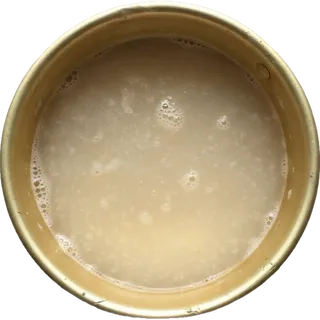
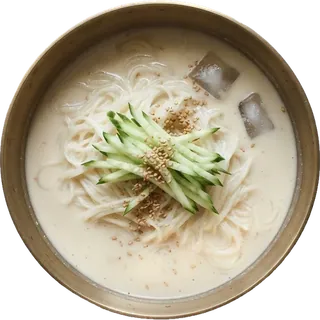
Dried red beans are boiled until they collapse, pushed through a sieve, and simmered back into a thick porridge with small balls of glutinous rice dropped in near the end. Korean households eat it on dongji, the winter solstice, when the dish's red color was thought to turn back misfortune.
How to order
팥죽에 연유는 빼고 주세요.
Condensed milk, when used, is stirred into the bowl at serving rather than cooked into the pot, so it can simply be left out if asked for before the bowl is made: “팥죽에 연유는 빼고 주세요.” Most patjuk sold at markets and traditional restaurants has no condensed milk in it to begin with.
History
Patjuk (팥죽) is eaten across Korea on dongji, the winter solstice in late December, when old belief held that ghosts and bad luck moved freely and the color of red beans was thought to turn them back; bowls were once set by the door as well as served at the table. Dried red beans are simmered for hours until they burst, sieved to remove the skins, and cooked again with saealsim, small rolled balls of glutinous rice flour, dropped in near the end. Markets in Seoul and towns across Gyeonggi-do still sell it through the cold months, heaviest around dongji itself.
Patjuk carries none of the usual hiding places for animal product: there is no kimchi paste to carry jeotgal, no soup base built on myeolchi-yuksu, and no egg garnish on top. The base is red beans, rice flour and water, sweetened with sugar or seasoned with a pinch of salt, and it is plant-based as it leaves most pots. Some stalls and bunsik shops, though, stir a spoonful of condensed milk into the finished bowl for sweetness and richness just before serving, which is the one thing worth asking about before it's handed over.
Where to get it
Traditional markets and bunsik stalls in Seoul's Jongno district, and juk (porridge) restaurants across Gyeonggi-do, sell patjuk through the cold months, busiest in the week of dongji in late December; a bowl runs 4,000-7,000 won at a market stall, more at a sit-down juk restaurant.