Dasima
Kelp is dried flat into stiff dark sheets with a bloom of salt on the surface, then simmered briefly for stock or simmered long and cut into jangajji. It is a pantry staple from Wando's kelp farms to Busan's dried-goods markets, used daily in soup and banchan.
How to order
다시마 육수에 멸치 넣지 말아주세요.
Soup made with dasima is usually simmered together with dried anchovy from the start, so asking after the pot is already going rarely works; the request has to land before cooking begins: “다시마 육수에 멸치 넣지 말아주세요.” Packaged dasima sheets and jarred jangajji carry no anchovy and need no asking at all.
History
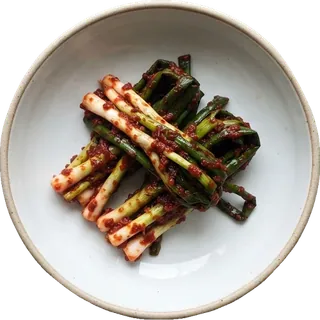
Dasima (다시마) is kelp, cultivated on ropes suspended in the cold waters off the south coast, where Wando County in Jeollanam-do has farmed it since large-scale seaweed aquaculture expanded in the postwar decades. Harvested in late spring, the fronds are dried flat on racks until stiff and nearly black, a white bloom of mannitol crystallising on the surface that cooks read as a sign of quality rather than spoilage. In Busan's dried-goods markets near Jagalchi it is sold by the sheet alongside anchovy and dried pollock. At home it goes into the stockpot daily and, cut and simmered long with soy sauce, becomes jangajji for the rice table.
Dasima itself is kelp and water, nothing else, and jangajji made by simmering it in soy sauce, sugar and chilli flakes is plant-based without adjustment. The question sits in what the kelp is simmered alongside: most Korean kitchens make stock by boiling dasima together with dried anchovy, myeolchi-yuksu, as the base for soup, stew and noodle broths, and the fish goes in at the start of cooking, not added at the table. A jar of dasima or a plate of jangajji is plant-based as is; a bowl of soup made with dasima stock needs the anchovy settled before it is ordered.
Where to get it
Dried-goods stalls at Busan's Jagalchi Market and the kelp farms and markets of Wando County in Jeollanam-do sell dasima by the sheet year-round, with the freshest stock arriving after the late-spring harvest; a packet of ten sheets runs 3,000-6,000 won, and a small jar of jangajji at a banchan shop costs about 4,000 won.