Gim
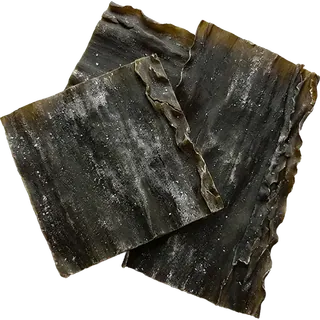
Laver is grown on nets anchored in the shallow tidal water off the south coast, harvested each winter, washed, and pressed into thin sheets that dry on wooden frames. Brushed with oil, salted and toasted, it turns up on breakfast tables from Haenam to Seoul as the cheapest side dish in the spread.
How to order
이 김 멸치액젓 안 들어간 거예요?
Plain roasted gim sold loose at a market stall or served as a banchan is oil, salt and seaweed with nothing else, so nothing needs to be asked there. Packaged seasoned gim snacks are the exception: a few brands season the sheets with anchovy extract alongside the salt, a detail on the ingredient label rather than the front of the package, so at a convenience store or snack aisle it is worth asking, “이 김 멸치액젓 안 들어간 거예요?”
History
Gim (김) has been farmed on frames staked in the tidal shallows of the south and southwest coast since at least the seventeenth century, with Wando and Haenam, in South Jeolla, among the oldest grounds. The flat, machine-cut sheet sold today took its modern form under Japanese colonial rule, when the industry was reorganised for export to Japan. Harvested through winter, the raw fronds are washed and pressed into thin sheets on wooden racks to dry, then oiled, salted and toasted over a flame. It is eaten daily, wrapped around a spoonful of rice at breakfast, and set out at Chuseok and Seollal tables.
None of the usual hiding places apply to plain gim: there is no jeotgal, no myeolchi-yuksu stock, and no egg anywhere in the process. The only additions are the oil brushed on before toasting, usually sesame or perilla, and the salt sprinkled over it, both plant and mineral. The one thing worth checking is which product a given seller stocks, since a handful of packaged seasoned-gim brands flavour their sheets with added anchovy extract alongside the salt, a detail printed on the ingredient label rather than announced on the package front.
Where to get it
Every corner store and traditional market in Korea sells packaged gim, and Haenam and Wando, on the south coast, hold the harvest and auctions each winter; a pack of ten roasted sheets runs about 2,000-3,000 won at a convenience store, and it appears, unordered and free, as a side dish at nearly every restaurant meal.